4 a.m. musings
On reclaiming our sanity and creativity from the clutches of anxiety in these times when the world feels as though it is burning down

I shouldn't have checked the news last evening.
I had made a conscious decision last week to not check the news, and I'm happy to report that I had one of my most productive and calm weeks in recent memory.
But far more than being able to add words to my current manuscript and compose and upload audio-stories over on YouTube, I moved through the days with a sense of hope and optimism.
About my work. About my life. About my ability to meet the present moment — as a parent, as a writer, as a human being — well and with my full attention.
And then I checked the news last evening.
It is as it has been these past several months.
The world is collapsing, innocent lives are being snuffed out, bullies are ruling the day, abetted by rich sycophants.
On the other hand, the ultra-wealthy continue to live their lives in their oases of personal paradise, completely untouched and unaffected by the goings-on in the world.
It is as if there are two parallel universes unfolding — one in which the world is burning, and the other in which those with the means to do so continue to lead the good life without a care — independently and irrespective of the other.
What happens in one world seems to have little bearing whatsoever on the other.
And then there are people like us — worrying about what the latest drama on anything (AI/politics/war/anything that is disruptive) would mean for our work, our livelihoods, our families, our children growing up in a world fraught with uncertainty — and ...
... And that's where it stalls.
We worry. We are anxious. We lose our sleep over what's happening outside the four walls of our homes and we're barely functional the next day.
I've been up since 4 a.m. I slept poorly last night. Now I dread looking ahead to this day and all the responsibilities it brings.
It is humanly unsustainable to live like this day after day after day. What is the way out then?
Stop asking rhetorical questions.
Or come up with answers to stop the thought spirals.
The rhetorical questions, especially about the future, are endless. The answers are non-existent.
How will AI affect my job?
Who knows? No one knows yet!
What kind of career will my child pursue when he grows up?
Who knows? No one knows yet!
The truth is no one knows the answers to these rhetorical questions. No one can precisely predict how AI will disrupt the industry you are in, or what the future holds in store for you and your family.
But leaving these questions unanswered only serves to fill that void in our mind with doomsday scenarios. Not knowing how the future will unfold drives home that uncertainty even more and leaves us feeling worse than before.
The best response to questions like these, which cannot be answered wholly in the present moment, are along the lines of ...
I don't know yet, but I will figure it out as I get closer or when I'm in that situation.
Q: How will AI affect my job?
A: I don't know yet, but I will figure it out if/when that happens.
Q: AI is changing the world. What kind of career options will be available for my child to pursue?
A: I don't know yet. We will figure it out when it is time to do so. In the meantime, I can focus on helping him build skills like literacy and social-emotional skills that will stand him in good stead no matter the situation around him.
We do not have to come up with solutions for problems that haven't arrived yet.
We don't need to borrow problems from the future.
But we can do the best we can now, strengthen the physical, emotional and mental muscles required to keep doing our work in the midst of external chaos and uncertainty, and trust that we will continue to face situations to the best of our capabilities as and when they arise.
Focus on the present moment and on what needs to be done now,
instead of being lost and feeling trapped in musings about the past or worries about the future.
When we stop getting stuck in the trap of rhetorical questions about the future, we can turn our attention and energy towards the present moment, see what it requires of us, and go about tending to it with utmost care and full attention.
For instance, when we go to pick up our child from school, we could look at them with great delight and decide to spend the evening with them talking about school and their experiences, look forward to enjoying dinner together, share moments of connection at bedtime.
Or we could look at them and project them into the future and start imagining how they'd turn out and worry about how life would unfold for them.
Which one is more effective?
The answer is obvious.
Tending to the present moment with great care and attention may not guarantee a stellar future. Nothing can, honestly.
But tending to the present moment with great care and attention will guarantee a stellar present moment!
And what is the future if not a point in time that too will become a 'present moment' in your life when you reach it?
How would you meet it then?
You'd meet it the way you've been practising meeting your present moments over and over again until then.
Also, inherent in our worries about the future are three assumptions that really have no ground to stand on.
- How can you say with any semblance of certainty that you'd reach that future point in time that you're so terrified of in your lifetime?
- How can you say with any semblance of certainty that that future moment will be fraught with difficulties?
- And how can you say with any semblance of certainty that you'd find yourself unable to face whatever life throws at you then?
So no matter which way we look at it, we really only have one option, which is to keep coming back to the present moment and work within its boundaries.
A big reason we resist being present is because we don't feel good about our circumstances.
For a long time, I wasn't at peace with the fact that I have 'only' one child, that we live in a small townhome, that I'm not yet earning an income from my books even though I work so hard.
I wanted all of these things to change because I thought they all represented some kind of 'lack' in my life. It has taken some inner work to train my mind to appreciate what I have and to accept the is-ness of it all.
I have one child but isn't he also an absolute blessing?
My home may be small compared to that of many others but isn't it cozy? Don't we love spending time with each other here? And when I put in some effort towards decorating it, doesn't the place reveal its splendour to me? It is a true sanctuary for me and my family.
I may not be earning an income from my books yet, but isn't that also because I've been hesitant to put my works in front of a larger audience for fear of them being rejected or disliked?
Now that I can see how I've been standing in my own way, the present moment doesn't appear undesirable anymore.
It appears full of promise and potential, and when I'm not clouded by anxieties over the future or regrets about the past, I can make the most of this time I have to write and market my works, to connect with my child and my husband, and to make this home a space of love and connection for me, my family and friends.
Turn off the TV. Stop reading the news.
Is information necessary when we won't act on it?
One of the things that feeds our anxiety is the news. Driven to hook viewers' brains with eternally negative messaging, the news is hardly factual anymore but heavily loaded with opinions and biases, rarely compassionate, and mostly incendiary.
Unless it's your job to stay informed minute-by-minute (politicians? investment bankers?),
or you have the means and the ability or the power to do something about all that is unfolding in the world,
you are better off remaining functional and present for your own life and your family's
rather than slipping into anxiety and dysfunction
because your worries — especially when unaccompanied by action — will do absolutely nothing to solve the world's problems,
but they will certainly multiply your woes.
For a long time, I argued against this. I thought it was irresponsible to not keep myself informed. Not watching the news was like being in denial, I told myself.
But the only thing I'd do after watching/reading the news was brood over it, feel anxious and worried and get caught in thought spirals. What good did that do to anyone?
My worries — because they were unaccompanied by action — made no iota of difference to people still suffering in war-torn regions. In addition, I'd become dysfunctional and not be fully present to myself and my family.
Sometimes we feel as if we've done our part when we worry endlessly about a particular issue. Worrying entails an expenditure of time and energy, after all. That, in fact, prevents us from taking meaningful action when we're able to.
Instead of worrying about what's happening in a particular part of the world and not contributing in a more meaningful way, I could focus on doing my work, explore ways to monetize my writings, and contribute a part of my income to relief efforts.
That would be a far more valuable use of my time and effort in the present moment than indulging in endless loops of thoughts that keep me from doing my work or looking after my family for days on end.
It is not selfish to look after ourselves in times of crisis. In fact, it is even more important to do so, because only when we are emotionally regulated can we be of help and service to others in need.
Look for the good.
Look for the good people, the good news, and the small moments of goodness in your daily life.
Hard as it may be to believe because of what mainstream media insists on showing us, goodness still exists. Seeking it out is crucial, and not irresponsible, especially in the most difficult of times.
I love watching golden retriever videos on Instagram. I love the Good News Network. I love baking banana bread at home. I love playing video games with my child.
I love chatting with KrA about all things under the sun. I love heading out on lunch breaks with him, especially on weekdays.
I loved having a Diwali celebration at our home this year with close family friends.
I love making my way to Paletta Lakefront on a Sunday morning to catch the sunrise.

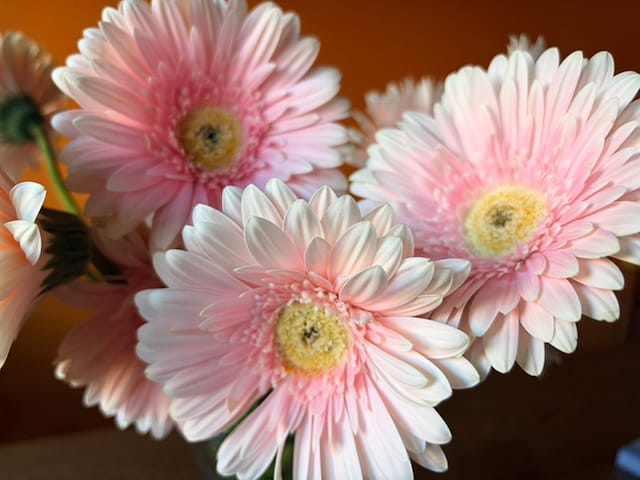
I love having fresh flowers in a vase on our dining table.
I love reading books and dog-earing them to collect wonderful quotes that I can share with you at a later date.
Focusing on our moments of happiness is not selfish or an act of denial.
It is an act of courage, in fact.
It is us standing up to the elements that are creating chaos and disorder in the world and saying, "I won't let this break me down. I will continue to be a beacon of light and hope by living the fullest life possible, given my circumstances, and sharing my strength with others."
When I am at peace and filled with joy and calm, I can look at the suffering of others with an emotionally healthy perspective. I am better able to help that way and not get caught up in the suffering myself.
Even the Buddha has expressed the necessity of looking after our own welfare first in order to be of service to the world.
Let one not neglect one’s own welfare for the sake of another, however great. Clearly understanding one’s own welfare, let one be intent upon the good. ~ Buddha
Accept that much of life is outside our control.
But we still have a lot of agency, creativity, and flexibility in the choices we make within the parameters of our existence.
I have no control over the decisions that governments and influential people make that have significant consequences for millions all over the world.
Sometimes, high-level decisions work in my favour and disadvantage several others. On other occasions, decisions work against me but likely favour other groups of people. These things are not in my control.
I can't help it if my favourite chocolate — Toblerone — now costs an annoying $5.49 instead of the $3.49 it used to cost a year ago.
I loathe the fact that an ice-cream shake at Baskin-Robbins now costs $10 compared to $7 or so only a year ago.
All while I'm not yet earning much income from my books.
But I still have agency. Given the budget that I have, do I wish to spend my money on chocolate? Or could I be more intentional about what I'd like to spend my money on, and also about what I'm putting into my body?
Not being able to afford something is not something to feel ashamed of.
It can be an exercise in exhibiting prudence and wisdom to realize that contentment and satisfaction lie not in the things that money can buy but in knowing that we have enough inner strength to not let our level of wealth or affordability or status dictate our self-worth.
I may never set foot in a 5-star restaurant but I can choose to feel incredibly proud of the nourishing meals I cook at home. (Sometimes I do wish I could rest while a plate of warm food magically appears in front of me. KrA is my wish-fulfilling genie on those days.)
Sometimes we may not be able to immediately purchase something we like. We can save up for it. We can take this time to put more thought into our purchases rather than buying stuff on impulse.
These meaningful shifts in how we think and act — slowing down deliberately to allow ourselves to be more thoughtful, more intentional — go a long way in shaping us as content, substantial human beings who are at ease with ourselves and can now offer our gifts of generosity, calmness, compassion, and understanding to the world.
I woke up at 4 this morning, my heart racing, my dreams full of chaos and cacophony. Even though I don't remember what I dreamt of, the turbulent impressions they leave behind are very vivid.
This is the first time in a long time that I've been able to regulate myself emotionally — through self-awareness, deep breaths, some journaling, and just some steely determination to not let more days of my life slip away in anxiety over a future that is simply not mine to predict.
In parting, dear Reader, I wish you too the strength to pull yourself from the endless depths of anxiety and thought spirals that keep you from meeting your present moments wholly.
Every book or workshop on mindset, manifestation, mindfulness — whatever name you wish to give to the much sought after panacea for this ailment of living in the present-day world — says pretty much the same thing in different ways.
There is some merit to reading about others' experiences or listening to others talk about it.
It is like learning a language. The more you read in it or hear others speak in it, the more you begin to grasp its nuances and become fluent in it.
But no one can teach you how to do it unless you open your mouth and utter the words, no matter how hilarious your accent may sound at first, no matter if you use the wrong words for the wrong occasion.
In the same way, no one can tell you whether meditation or journaling or creative work or whatever else will serve as your balm in difficult times.
It is a journey of exploration for you to undertake — running the entire gamut of mis-steps and failures — and find out what sticks, what makes a difference, and what helps you in the long run.
Become your own student. Become your own teacher. And in doing so, become your own wellspring of wisdom. 🙏🏼