books you may love: I Just Wish I Had a Bigger Kitchen by Kate Strickler
Reflections on a book that delves into life, love, motherhood, friendships, worries about money, time and control... offering all the love and validation we all so desperately seek... and need.
Of late, I’ve been wanting to slow down in my reading habits to allow myself more time to reflect on and soak in the joy of a book I’d have just finished reading, instead of rushing on to the next book to fill the void left by the completion of the previous one.
For me, thinking equals writing. Writing down my thoughts and musings is how I even gain clarity on what I feel, what I think, and how I’d like to assimilate those experiences in my being or respond to them in a way that is aligned with how I intend to show up in life.
It’s a blessing that there’s an abundance of books to dive into and relish the time spent between their pages.
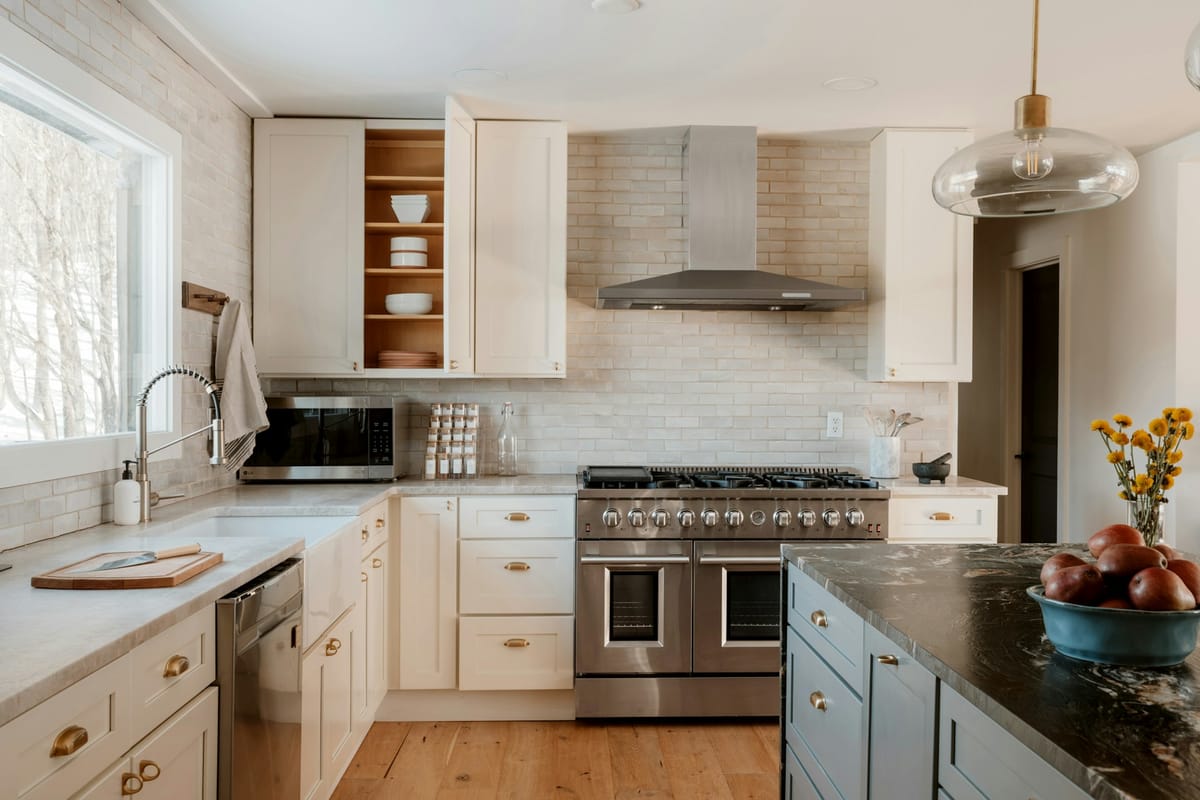
I Just Wish I Had a Bigger Kitchen … And other Lies I Think Will Make Me Happy by Kate Strickler caught my eye because of its bold title.
Of course, I wish I had a bigger kitchen. In fact, as D’s growing up, I wish we had a bigger entryway, and I wish we had more than one bathroom on the top floor. Heck! I wish I had an entire bathroom to myself. No! I want an entire wing of an entire house to myself!
So imagine how eager I was to dive into the pages of this book!
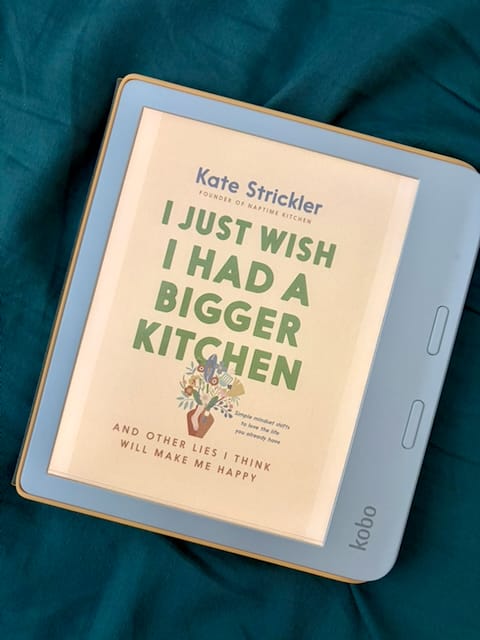
"I have had the privilege of understanding the tension between a life you are grateful for and a life you are discontent with on a larger scale."
~Kate Strickler
When was the last time you stopped to take in the Table of Contents of a book?
- I Just Wish I Had a Bigger Kitchen
- I Just Wish I Was a Better Mom
- I Just Wish I Had a Better Husband
- I Just Wish I Had More Friends
- I Just Wish I Looked Better
- I Just Wish I Had More Money
- I Just Wish I Had More Time
- I Just Wish I Had Control
- I Just Wish My Life Looked More Like Hers
- I Just Wish That Had Gone Better
- A Life You Love
Aren't these chapter titles simply glorious and to the point?!
I can relate to almost of these! I’m at ease mainly with how I look (5) and the fact that very little is in my control (8). But the rest? Strickler might as well have been talking about me.
Strickler offers several in-depth questions to foster practical mindset shifts at the end of each chapter. But primarily, she relates her own experiences with these longings, her realizations, and the fact that the two will always be at loggerheads with each other.
Understanding something intellectually does not make the visceral longings and desires go away.
In a couple of places, Strickler also gets a little Jesus-y, but that accounts for a minute fraction of the book.
So even if turning to God or religion in response to life’s conundrums is not up your alleyway, this book would still make for a validating and reassuring read.
I’ve riddled the ebook with highlights and annotations. This is a book best praised and cherished through excerpts.
So let’s go chapter by chapter. Why not?
(All excerpts from the book are marked as such to distinguish them from my musings.)
Introduction
You can go to hell without moving an inch,
just focus on what you lack.
You can taste heaven without leaving earth,
just rejoice in what you have.
~ James Clear
(excerpted from the book)
#
Folks are usually about as happy as they make up their minds to be.
~ Widely attributed to Abraham Lincoln
(excerpted from the book)
#
And then I opened Instagram.
…
Photo after photo showed a life just one step nicer than my own. And that’s when the spiral started.
…
I know this sounds dramatic, but I am sad to say it’s the reality of how I’ve spent so many of my days. I’ll be feeling good about myself, and one photo can completely knock me over. Everything I thought was enough is no longer so.
I see someone with a standard of living slightly ahead of my own, with an appearance of being able to afford more than I can or travel more than I can, and I get jealous.
I believe they are happier. I want the giant kitchen or the lake house. I would even settle for the cute gardening outfit.
But then I keep scrolling. There’s been a horrific earthquake in Haiti. Their houses have little to no infrastructure, and the entier country is in shambles.
…
You see a tragedy, and it completely shifts your perspective. You no longer loathe your body when your close friend finds out she has cancer; you’re just grateful to be healthy. …
Seeing lack and loss in others puts your own abundance on full display.
And this is how we live, floating in a sea of people, bobbing up and down, depending on who we are around.
(excerpted from the book)
#
Was Strickler talking about me? Because this is exactly me. Gutted with envy one moment when I focus on what I lack, then swinging to the other end of the pendulum when I look at what I have that others lack. It’s a constant see-saw between two extremes.
#
This was the tension I lived in for years —- knowing my life was a gift, yet also constantly struggling and comparing it to others.
(excerpted from the book)
#
I wanted someone to tell me what I could do when my mind was in a mental hole, someone to take the shovel I was digging deeper and deeper with and hand me a ladder to climb out.
(excerpted from the book)
#
I have had the privilege of understanding the tension between a life you are grateful for and a life you are discontent with on a larger scale.
(excerpted from the book)
Chapter 1: I Just Wish I Had a Bigger Kitchen
For me, space has always been deeply tied to my anxiety. When I am anxious, I crave more space as an escape. I want clear counters and minimal visual clutter. My body is having trouble breathing and thinks that what it needs is literally more room to breathe. Paradoxically, when I am anxious, I do not want to be alone.
(excerpted from the book)
#
This is entirely me. I didn’t realize it until I read this passage, but this is so me. When I am anxious, I start cleaning. I start decluttering and throwing out everything. I become determined to live a minimalistic life!
But I also want to feel cozy and comforted, often by the presence of KrA and D. I wish to surround myself with beautiful things, memories and souvenirs from the places we travelled to, the things we did together, the people we were with on those occasions...
Chapter 2: I Just Wish I Was a Better Mom
There are things about the way my mom parented us that were really good and helpful and other things I want to do differently.
But in the moment, when the adrenaline kicks in, it is so hard to know what I am doing from a place of wisdom and what I am doing out of spite or anger.
What am I doing because I choose to, and what am I doing because that’s the only way I have seen it done?
(excerpted from the book)
#
The lines above reminded me of something Morgan Housel says in his book, The Psychology Of Money. He says that when we look to dissect business and investment choices that have been successful, it is really hard to tell how much of that success was owing to wise decision-making and how much of it was owing to other factors often beyond the decision-maker's control.
#
… I discovered a large lesson this was so hard for me: I wanted to do it all. To me, being a good mom meant doing it all.
(excerpted from the book)
#
I can relate to these lines so much! It's that endless array of questions every mother poses to herself. Am I doing too much? Am I doing enough? Should I intervene? Or should I just witness? How much longer do I have to wait and watch? Shouldn't I have stepped in already?
Sadly, there are no helpful answers to all these questions that keep cropping up. The one way that's helping me cope on days when the questions get too much is telling myself that I, and everyone else, is really doing the best we can.
#
Talking about her work as a social media influencer, Strickler writes
“It’s strange work brings both a sense of pride and insecurity. A “look at what I have built!” mixed with a healthy dose of “what in the world have I built?"
(excerpted from the book)
#
I also think there is an underlying need to prove oneself in motherhood, namely because there really isn’t an easy way to know if you’re doing a good job. For this reason, many women (again, myself included) don’t love to admit they need help.
(excerpted from the book)
#
Something that has really freed me up is letting go of the notion that i want to voice any regrets in my parenting. When I start to live under the burden of “Make sure you do the right thing here! You don’t want to miss this opportunity!” I start to feel crushed.
(excerpted from the book)
#
Exactly! This is what the phrase Carpe Diem did to me. I felt crushed at the overwhelming burden of having to make each moment of my ‘one wild and precious life’ count.
For years I thought I have to make the most of a sunny afternoon with blue skies and white clouds drifting past by going to the beach or spending time outdoors. Else, it was an opportunity squandered.
I still feel the pressure to make the most of the time that D spends at school. If I don’t spend that time writing or editing, I worry I have wasted that opportunity.
High achievers often feel this tension when they find themselves unable to rest. I’ve not found an answer to this question. How much rest is needed? How much rest is enough?
I’ve always been a hard worker, and I’ve enjoyed it. Until I couldn’t. Until something in my brain snapped and all I could see were the doubts and expected outcomes, and I lost all joy in doing what I loved. This is a pit I am still crawling out of.
Chapter 3: I Just Wish I Had a Better Husband
Kudos to Strickler for saying this out loud and for normalizing these secret thoughts and wishes women like me harbour on occasion but don't quite know what to do with and only end up feeling terribly guilty about!
Strickler quotes something her friend said to her on an occasion when she wished her husband would do something differently.
“Kate, you can’t have it all. You can’t have a man who is well planned and also super spontaneous. You can’t have someone who is an introvert and also an extrovert. The things you love about Nate are the very things that make him Nate. To ask him to also be all of those other things would be to ask him to no longer be the things you love about him."
(excerpted from the book)
#
Golden words! And so true!
These words made me look at KrA very differently. I recently wrote about how I often wished he was more gregarious and outgoing, but the truth is that his silent nature is what serves as a bedrock for me to navigate my own turbulence of emotions.
Truth be told, I too am not a person who can spend a lot of time in the company of others. One social outing, and I need thrice as many hours to decompress and relax, to quiet the chatter inside my head.
Which brings me to wonder — what is it about looking at the outside world that messes with our heads, makes us question the value of what we have, and falsely gets us to believe that we ought to be hankering after something else or something more?
What do you think, dear Reader?
Chapter 4: I Just Wish I Had More Friends
I still struggle with wanting to feel included. To me, inclusion feels synonymous with belonging. FOMO, or the fear of missing out, is really FOBLO…fear of being left out. A fear that someone might remember me and actively choose to not include me.
Being left out is extremely painful, because it can eat at the core of your identity, leaving you wondering what you need to change about yourself to be included. Am I too loud? Too boring? If we moved to a closer neighbourhood, would they invite me then? It quickly becomes an identity issue. “If it’s not you, then it must be me.”
(excerpted from the book)
#
Years of therapy and reading books on CBT and DBT and mindset resources from Big Life Journal have finally helped me change my self-talk in such circumstances.
I still remember the times when I was quick to jump to the conclusion that someone didn’t want to include me in their plans. Those thoughts would send me down a spiral of shame and unworthiness, and I'd spend days in that cesspit.
Maybe they didn't want to include me. Maybe they did. Either way, it’s not in my control.
I don’t have to let another person’s opinions about me or choices pertaining to me dictate what I feel or think about myself.
When D started JK in the midst of the pandemic, I remember being desperate to find mommy friends. A number of social mishaps later, KrA gently reminded me that just because D is friends with a particular child doesn’t mean we have to expect to form a similar bond with that child’s parents.
In these past few years, I’ve come to see how fluid friendships are, changing and shapeshifting as they explore new interests and activities and find themselves sometimes solo or discover new companions along the way.
I myself am mostly in touch with people whom I interact with regularly in person. Overseas, it's primarily my parents I speak with often. Siblings and cousins don't play a significant role in my day-to-day life.
The idea of everlasting friendship, even idealistic love, is very alluring. Which is why books and movies portraying these deep bonds — Harry Potter, Wings Of Fire, etc. — are much loved. In stories we seek the connection that is really hard to come by in real life.
But reality is different. People come and people go. The Big Life Journal, a resource for children that I absolutely love, has an analogy that compares the journey through life and friendships as a ride in an elevator.
Some people step in, some step out. Sometimes we're the only person riding for a while. And that's how it generally is in real life.

Chapter 5: I Just Wish I Looked Better
Strickler quotes a quote on humility in the book.
"Humility is not thinking less of yourself; it is thinking of yourself less.”
(excerpted from the book)
#
Aging would be so much easier if we all agreed to do it together, like making a pact with your friends not to give the kids cell phones until they turn sixteen. But we all know how that goes. One mom cracks and her kid has a phone, and now all the moms feel the pressure to give their kids one as well.
(excerpted from the book)
#
This I can relate to. So many moms have introduced their children to video games, and in the same breath express worry how much time their kids are spending on screens.
I’m in that boat myself now. At some point in the next year or so, we too will be venturing into the world of Minecraft and Roblox, and I can only hope that the good habits we’ve helped D cultivate all these years will stand him in good stead.
Chapter 6: I Just Wish I Had More Money
Strickler researched the phrase “Keeping up with the Joneses” and came across a cartoon strip in which a woman is egging her husband on to ask the boss for a raise, claiming that another richer woman is 'getting something out of life'.
Referring to that strip, Strickler writes:
It’s that small little phrase that I so quickly believe: “She gets something out of life.”
I believe that because another person has a larger house, a nicer kitchen, or a better car that they are getting more out of life.
I know money can’t buy happiness, but I still find myself just like Clarice (referencing the comic strip). Money might not buy happiness, but it might just buy me a little more than I currently have.
(excerpted from the book)
#
These words are golden. This is exactly how I feel. There's always this nagging fear that I'm not squeezing every last ounce of potential and promise from my life and myself if I don't have anything to show for it in a material sense.
#
Strickler goes on to quote Morgan Housel from his book, The Psychology of Money (another book I’ve read and loved).
The hardest financial skill is getting the goalpost to stop moving… Modern capitalism is a pro at two things: generating wealth and generating envy. Perhaps they go hand in hang; wanting to surpass your peers can be the fuel of hard work. But life isn’t any fund without a sense of enough. Happiness, as it’s said, is just results minus expectations. ~Morgan Housel, The Psychology of Money
(excerpted from the book)
#
Winters spent in a tropical island. A cottage in Muskoka. Several vacations a year. A house with a large backyard. And perhaps also a pool? Even though just last week we were thinking how awesome it is to be able to go to a community pool and meet other people there, so many kind folks, and even have a lifeguard on hand!
The desires are endless. But more so, sometimes it feels downright wrong to live a life without ambition or desire. Aren’t we supposed to aim higher? Aren’t we supposed to ‘make something of our lives’?
Chapter 7: I Just Wish I Had More Time
Someone asked me recently what was my biggest regret in life…
being in a hurry.
Getting to the next thing without fully entering the thing in front of me.
I cannot think of a single advantage I’ve ever gained from being in a hurry.
But a thousand broken and missed things, tens of thousands, lie in the wake of all that rushing.
Through all that haste, I thought I was making up time. It turns out I was throwing it away. ~Mark Buchanan, The Rest of God
(excerpted from the book)
#
I see myself struggling with this even now, on one hand wishing the writing of this piece were done already, not realizing that in wishing for this to end, I’m forgetting to immerse myself in the creation of this post.
I love writing. Yet I haven’t made much progress on my manuscript this past fortnight. Sure, illness and requiring to help D navigate some situations at school took time and mental resources.
But the deeper truth is that I’m squirming every time I open the manuscript. The itch to run away from it is so strong. And I know why that is.
I’ve been asking myself, “What’s the point?” “Who’s going to read this novel?” “Will anyone even like it?” “What if everyone hates it?”
There are no answers to these questions, and in asking them repeatedly I have only created a quagmire from which I’m unable to pull myself out.
#
While Annie Dillard’s famous quote saying “How we spend our days is, of course, how we spend our lives” can be helpful, it also haunts me. This quote is a reminder that what I choose to do each moment strings together to form hours. Hours form days, days form weeks and so on.Before you know it, a decade has passed. But for me, the days would pass, and I would wonder what the heck I even did with the time. did anything I accomplished add to how I want to spend my life?
(excerpted from the book)
#
I remember on one occasion seeing Nate outside reading a book of poetry and feeing both despondent and jealous. Jealous because I wanted to be reading the book of poetry, and despondent because I knew even if I had the time, I would never sit down to read it.
(excerpted from the book)
#
Strickler must be my soul sister! This is me when KrA is watching K-dramas or doing anything that appears remotely like relaxation and enjoyment.
Every morning, after making breakfast for all of us and packing D’s lunchbox for school, KrA sits down with a cup of coffee and his iPad, perhaps watching a K-drama or perusing the news, for about 15 minutes. That’s his me-time.
The envy it generates in me! How could he possibly relax when I’m trying to keep my cool while reminding D for the umpteenth time to pack his bag for school?
Yet, if given the option to put my feet up and relax while the household is falling apart around me, I’d be the first to jump out of relaxation mode and right into the thick of the action. 🤷🏽♀️
Chapter 8: I Just Wish I Had Control
But I think my biggest regret would be worrying about events that never came to fruition, wringing my hands over ideations, when right in front of me precious, incredible life is happening.
(excerpted from the book)
#
This. I feel this too so deeply.
When I’m busy worrying about whether anyone will read my stories, I’m not enjoying the process of writing itself.
When I’m busy worrying about whether D will develop employable skills for his future, I’m not at all paying attention to how beautifully and intuitively he plays the piano.
#
The more good I notice and realize is outside of my control, the easier it gets to loosen the grip I have so tightly on how I believe my life should look.
(excerpted from the book)
#
I am very high energy and tend to wake up feeling like a kettle near boiling over, and early exercise takes the edge off for me.
(excerpted from the book)
#
Mornings are the hardest for me too. I wake up with all the anxieties that I’ve not laid to rest the previous evening, crowding in my mind, demanding release.
Even if I don’t have the bandwidth for a full exercise regimen first thing in the morning, following a short, simple routine of a handful of morning stretches - now made necessary because of a weakening lower back — puts me in a better mood than otherwise.
Chapter 9: I Just Wish My Life Looked More Like Hers
I didn’t highlight anything in particular in this chapter but it reminded me of the times I struggled still struggle with wanting another person’s life… especially when it comes to the size of their family.
I’d look at someone with three children in tow and I’d want that. But when I’m at home, I’m very content with hanging out with little D.
And I know that deep down, despite all my worries about D not having a sibling, I don’t really want more children.
I’m very grateful for the chance at motherhood that D has given me. But I also love having the time to write and read stories.
I love this slow pace of life that having one child allows me to enjoy. I love all the time that I get to spend with KrA and D, especially now when I find I have such limited energy and I can’t imagine having to care for another human being when I already feel stretched so thin.
But, knowing that doesn't make the raw longing go away completely. It crops up from time to time, though with the years passing by, this feeling has been much easier to deal with and is not as crippling as it used to be earlier.
Chapter 10: I Just Wish That Had Gone Better
If you think of this world as a place intended simply for our happiness, you find it quite intolerable; think of it as a place of training and correction and it’s not so bad. ~ C.S. Lewis, God in the Dock
(excerpted from the book)
#
I’ve put this quote up on the wall in front of me. It’s a reminder I need every single day.
#
Strickler talks about a much anticipated family trip to Disney World in which her family ends up with a stomach bug, forcing them to cut short their trip.
Things would not always go as planned. There would be things they hoped for that would be cut short or canceled. They would get things they looked forward to that would not meet their expectations.
I started to realize my job as a parent was less about helping them having the most fun in life and more about helping them navigate all the disappointment that would come their way.
I needed to teach my children to hold the same tension I was struggling to hold: to enjoy life but expect hardship.
(excerpted from the book)
#
I’ve grown up with the belief that if something has gone wrong in my life, then I am to blame. Surely I could have avoided that thing if only I had worked harder or smarter. So much so that I’d even feel mad at myself when I fall ill. I didn’t realize until much later in life how I held myself to very high expectations.
It was only when I found myself on the brink of spilling those expectation of little D that I caught myself and decided to change tack. I’m not always successful in this, and I apologize to D every time I slip up.
Looking at life as a place of training and correction helps take the pressure off the performance. I don’t have to get it right all the time. I can’t get it wrong far more often than I think I’m allowed. And it would still all be ok.
#
When I remember I am living in a world that is not what God wanted it to be, I can view my role as someone seeking to help make it better instead of someone seeking to get every ounce of joy out of it.
(excerpted from the book)
#
Even though I don't necessarily subscribe to the author's thoughts on God, I do think that the above sentiment is a healthier way of looking at the world. Instead of whining about how bad things are, we could turn our attention to do our part in trying to make things better.
#
Now that I have kids, I understand why the military uses sleep deprivation as a torture tactic.
(excerpted from the book)
#
Sleep. And silence. I’d do anything for healthy, uninterrupted doses of those two precious commodities. Also a sense of safety and security. What else should I add to the list?
What would you add to the list?
Chapter 11: A Life You Love
Strickler quotes a conversation between the Rabbit and the Skin Horse in The Velveteen Rabbit by Margery Williams.
“Real isn’t how you are made,” said the Skin Horse. “It’s a thing that happens to you. When a child loves you for a long, long time, not just to play with, but REALLY loves you, then you become Real.”
“Does it hurt?” asked the Rabbit.
“Sometimes,” said the Skin Horse, for he was always truthful. “When you are Real you don’t mind being hurt.”
“Does it happen all at once, like being wound up,” he asked, “or bit by bit?”
“It doesn’t happen all at once,” said the Skin Horse. “You become. It takes a long time. That’s why it doesn’t happen often to people who break easily, or have sharp edges, or who have to be carefully kept. Generally, by the time you are Real, most of your hair has been loved off, and your eyes drop out and you get loose in the joints and very shabby. But these things don’t matter at all, because once you are Real you can’t be ugly, except to people who don’t understand.”
~ Margery Williams, The Velveteen Rabbit
(excerpted from the book)
#
When we were leaving from Australia back to Canada with six-month-old D in our arms, we had to clear out the apartment we were living in. We sold our fridge to a lady who lived in the neighbourhood, a few blocks away. She had hired two men to transport the fridge from our place to hers.
At our place, the appliance was in pristine condition. By the time it reached her house, it was dinged and scratched in several placed.
The workers probably didn’t care for the memo ‘Handle with care’.
I suppose life too doesn’t go by that memo. We are going to get dinged and bruised several times for no fault of our own. The dents and scars will not necessarily fade and we will likely carry them with us for the rest of our lives.
Perhaps it is time to stop looking at them at aberrations and consider them as inevitable features of being alive.
#
When I first gave the title for this book, the subtitle read “And Other Lies I Thought Would Make Me Happy.” It was only after finishing that I went back and changed it to the present tense. As I wrote, I realized that so much said here is a working narrative in my brain, ideas and ideals I marinate on often but have not yet mastered.
It’s a funny dichotomy to write a book on the subject of loving your life. To some degree, I feel like a fraud. I’m thirty-five years old and am still struggling with so much of what I wrote about. Perhaps there is something to be said of being in the thick of it as I write. Time has not had the ability to colour my experience in a guise of wisdom. I am still working through what game I am playing; I am still fighting not to catch my reflection too long in the mirror or feel shame for my body as it ages; I am still grappling with how to spend both my money and my days.
(excerpted from the book)
#
It was a relief to read these lines. Oftentimes, self-help authors seem to like to concoct a success story with a clear line demarcating the before and the after. I much prefer Strickler’s approach and admission that she continues to grapple with the push and pull of these tensions.
The struggle of wanting to figure out how to do this ‘life’ thing right, while also realizing that there is no such thing as ‘right’ or ‘wrong’. The most we can do is soften around those hard edges of worry and shame, of guilt and remorse, and move deeply into what each day has in store for us.
There are no answers. Which means we can finally set all our questions down on the ground, not badger ourselves to keep carrying their burden, and release them.
#
I Just Wish I Had a Bigger Kitchen is such a lovely book. I'm sure you can tell that from the length of this essay. It's a book I'll return to often, especially when life's disappointments seem to cloud my vision and prevent me from seeing all the other good that is happening alongside.
If this reflection on bigger kitchen dreams, motherhood tensions, and the quiet wishes we all harbour resonates with you, join my monthly newsletter for musings on writing, reading and living the creative life.