lessons learnt from five years of being an author-entrepreneur
Back to the basics is where we come after detours and fascinations with shiny objects along the way
A long time ago I read about/heard statistics that 90% of businesses fail within the first five years of their founding.
Well — it's been five years since I started writing these 'annual reflections' on my writing life and career, which means I've been thinking of this as a business in some way or the other during this time.
What I've come to realize now is that all this while, I've been trying to run this as a mature business when I'm still only in the R&D phase of this fledgling entity!
I'm still trying to find an audience and a market for the kinds of books I write while trying to keep expenses low and also while trying to protect my sanity and creativity so that I can keep writing the stories I love, not knowing whether there's market demand for them or not.
But I've also been implementing strategies that were clearly meant for writers with a larger audience/far more proven readership than I currently have, which has been a huge mismatch.
Finally, I'm beginning to see these misalignments and take steps towards course correction. That's what the following year is going to be about. A reboot. A refresh. A restart.
How liberating it is to let some things go! The energy of starting anew — carrying wisdom from past experiences and still looking to the future with hope and optimism — is something quite potent. It can never be underestimated.
Hello, Dreamer! Welcome back to this year's annual reflection on the life of this particular fiction author.
Back in 2020, I was in the midst of writing my first novel, having already published a novella a couple of years before that. At that time I was still doing academic editing on the side, but one thing I was beginning to notice in my life was that my capacity to do stuff was slowly diminishing.
For the first time after becoming a parent (little D was 3 and a 1/2 years old when the pandemic hit), I had to really accept the fact that given my circumstances — how much support we had, how much time we wanted to spend with D, how much income we had, etc. — I couldn't do it all.
I couldn't have a full-time job, write as a side hustle, be a conscious parent to D, sleep well, look after my health, eat consciously, and live in a clutter-free space too. Not unless I had a staff of 1 or 2 or more working with me to manage the household operations and keep them running efficiently and effectively.
I was bitter about it all for a very long time. After all, I grew up thinking I could do whatever I wanted, be whoever I wanted to be. All I had to do was dream big and work hard, and the sky was the limit, wasn't it?
Somehow I didn't know I'd have to account for the emotional upheaval that comes with becoming a parent and becoming a writer.
And that learning new coping and emotional regulation skills along the way would become the more important job than the actual work of parenting and writing.
I've always believed that it doesn't quite matter what we do as much as who we become in the process.
And truth be told, when I think of the moments of joy I've found in writing, it is usually the writing of my very first book, In Search Of Leo, that comes to mind.
After that, what I remember more (and maybe this is a trick of the mind and not necessarily reality) is the angst of finding more time to write, the constant push to put more words to paper as though chasing a lofty daily word count goal was what would propel me to the end-goal, and an ever-present sense of urgency to get there.
Which leads to the question — What was the end-goal to begin with?
For a long time I thought my end-goal was to have a certain number of books published by a certain timeframe in order to find validation in the market in terms of a readership of a certain size and measured in terms of a certain number of books sold.
Looking back, I think my end-goal was, honestly, to feel free.
To live with a particular ease and openness of heart, and not carry around this constant dull ache of never feeling enough, of worrying that I'm not doing enough to set myself and my family up for a 'better' future, although if you pressed me on the details of what 'enough' and 'better' even mean to me, I'd come up empty and feel even more inadequate than ever before.
Because ... if I don't even have that clarity in thinking, what shaky foundation am I building a life on?
Over the years I've come to see that no amount of success can give me these feelings of confidence and adequacy, of worthiness and belonging, in a world where nothing ever feels enough.
It was too much to demand that my writing supply me with these tender, ephemeral feelings and safeguard them.
It had to be the other way round. I had to feel safe and secure first in order to let creativity thrive.
Lessons learnt, and all that, so let's see how we can change things going forward.
But first, a look at all that went well. Because even a broken clock is right twice a day! 🤭
Celebrating my Wins
- I completed writing Book 1 of the fantasy/sci-fi duology I have been working on, on and off, since April 2022. It stands at a little more than 113,000 words!
Book 1.5 of this series is all ready and completed. That one stands at about 62,000 words.
I'm now in the thick of writing Book 2 — 40,000 words and counting — so this series is the focus of all my attention for the next few months.
Frankly, I'm quite happy with all the writing I've done so far this year! - I wrote my 200th Tales For Dreamers story!
- I published two projects I had been sitting on for a long time — Tales For Dreamers: Volume I, which is a collection of 100 short tales, and a fantasy novella titled Blue-Skinned Mystics.
I also published my first hardcover version of a book with Tales For Dreamers! - I sold my first short story to a semi-pro magazine, Pulphouse Fiction Magazine. My story, A Shadowy Death, appears in Issue #39 and was published in April this year! (I think I completely forgot to tell you all about this!)
- My flash fiction tale, 'Alternative Uses For Public Art Signs', also appeared on a public art sign (as the name suggests!) by The Beachway Park in Burlington as part of the Ontario Culture Days celebration this year! It was one among 20 creative works selected by the City of Burlington for display this year.
- I started a YouTube channel, learnt how to use GarageBand, narrate tales and mix them with music. I have posted 18 audio-stories so far!
- I've experimented with a couple of small marketing strategies — a paid newsletter promotion, for instance — and am slowly getting the hang of how slow and long-term this game is.
Looking Forward
- I'm pausing posting new stories in the Tales For Dreamers series as well as new audio-stories over on my YouTube channel.
I remember coming back to writing these tales last year primarily as a way of sharing fiction content with my newsletter subscribers to remind them that I'm a fiction writer, overall.
I don't see this working well, and perhaps that's partly because my audience is primarily composed of readers who seem to enjoy longer works.
I've come to the conclusion that I'd be better off writing novels and novellas, and marketing them well, instead of constantly foisting free stuff on to my readers and devaluing my own work.
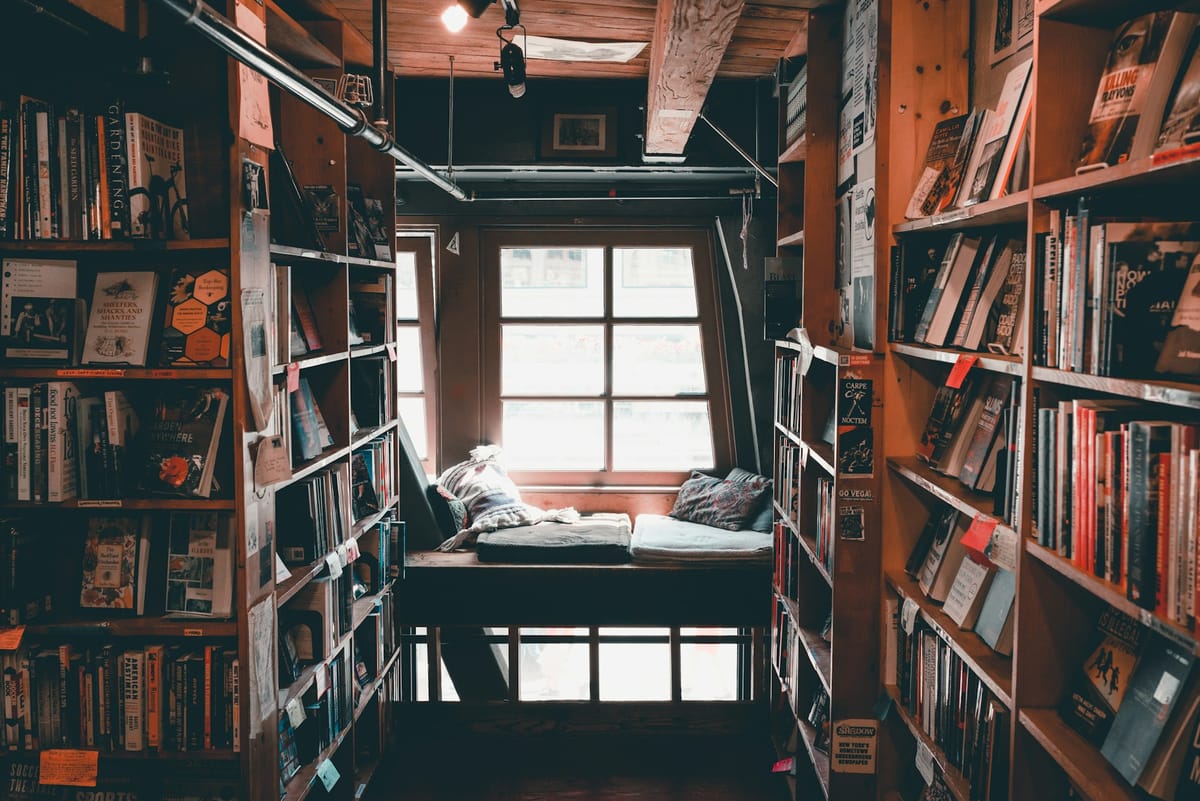
I recently heard author coach Becca Syme explain how if you have a bookstore that's doing reasonably well, you'd consider investing in a coffee machine to offer an additional, related product to your clientele or attract new clientele.
But if your bookstore didn't see much foot traffic in the first place, spending effort and resources in setting up a coffee corner is hardly likely to attract more traffic. You'd only be pushing yourself more in the red.
This is the underlying principle that is guiding my decisions moving forward.
Instead of forging ahead with the next book or the next series, or finding a way to market my books and testing them in the market, I have been offering new stuff to a non-existent audience. Be it an online store or free weekly flash fiction or audio-stories on YouTube.
Naturally, this hasn't worked. Which brings me to the next point.
- I will continue to experiment with marketing — paid newsletter promos, and even announcing my forthcoming titles to my newsletter — after I have finished writing Book 2 in the current series.
In the past I've just dropped books on my unsuspecting audience without giving them fair warning. Almost as if I feel the need to make an obligatory announcement and hope that no one takes notice for too long. And well, that's precisely what has happened.
Isn't it the idea of marketing to generate awareness in advance and get readers interested in what's coming?
Naturally there's some inner work to be done there, but recognizing that fear of letting other people know about my books is the first step.
I have some ideas for how to promote new works, so once I've completed writing the current WIP, I'll be playing in that field for a bit.
I suppose that's another way of saying that I'd be more strategic about how I use content marketing and paid promotions, and I'm really excited about the ideas that are coming up!
- I will continue to write and publish more books and stories.
I started writing stories for the love of them. In fact, even before I started writing Tales For Dreamers in 2011, I was writing a novel way back in 2007. A handful of unfinished drafts. Something my 20-year-old-self would have written. I doubt I'd ever finish those ones now.
I didn't get into this writing life to set up my own store or start a YouTube channel or keep writing only short fiction.
I did all those things when there was a creative desire to do so, more often prompted by what experts in the industry were touting as the next big thing at the time.
But I've also come to realize that I started them at a time when it wasn't the right time for me to do so.
So it felt as if I was building a number of bridges at the same time and making very little progress on any individual one, which quickly became quite demotivating. There was a lot of learning along the way, no doubt about that.
But now it's time to let them go and focus on what really matters — writing my books, telling all the stories I want to tell, and getting them into the hands of more readers in the hope that some of them at least would find solace in my writings just as I've found comfort and understanding in the books of so many authors.
- I need to be wary of what I fill my time with.
Sometimes I fill my plate with lots of things to do in order to feel as if I'm doing something to keep the wheels turning.
Whether I do these as creative endeavours or to soothe the relentless worry I feel underneath it all is something I have to look into myself to unearth.
One thing I know is that fear of my books not doing well keeps me from writing more than I possibly could.
As long as my book remains a WIP, it is only subject to my judgement. Once it's out there in the world, it takes on a life of its own, and that too can be a frightening prospect in some ways.
I'm going to have to trust that I'm doing the best I can at any given point in time; if a book resonates with a reader, that's awesome. If it doesn't, that's par for the course, and there's precious little I can do but move on and write the next story that comes to me.
Also, writing a novel is a long endeavour, taking several days/weeks/months/years depending on how you write. That's a long time for apathy and self-doubt to seep in and kill all momentum.
My forays into posting weekly flash fiction and YouTube audio-stories arose partially from needing a distraction from writing the fear of writing something that may or may not sell.
But the more distractions I fill my time with, the less time, energy and effort I have to actually spend writing or even encountering and pushing through the discomfort and fear that keep me from writing.
So this is one aspect of my writing life that I'm curious to observe more and work with in the coming year.

On Mindset
One big change this year has been the relatively greater ease with which I'm now able to take rejection or failure compared to my early years as a writer.
My heart would sink every time a reader would unsubscribe from my newsletter, or every time a magazine would reject a short story submission, or every time a published book would do poorly.
In the absence of data, it was hard to tell whether it was something I did wrong or just something else altogether — maybe the reader was no longer interested in or didn't have the time to keep up with my newsletter stuff, or that I hadn't marketed my books, or that the editor was simply not in a mood to enjoy my story.
That's the thing about this industry. There is really no objective measure of a good story. How can you tell what is a good story?
We have a tendency to think that books that sell well are stories that are told well.
To an extent this must be true, in the sense that if the story is good and gets some discoverability, the chances for it to be talked about and spread by word of mouth and benefit from marketing efforts in general are higher.
But the greater truth is probably this: Yes, books that sell well are often stories that are told well and marketed well.
But we'd do well to remember that the converse is not always true.
Stories that are told well and marketed well do not necessarily convert into high book sales figures.
The entertainment industry is a capricious industry.
While people can dissect in the aftermath why a book did particularly well, no one can predict beforehand whether a book will sell well or not.
And when it doesn't, it's also hard to pinpoint what one could have done differently to obtain a different, more favourable outcome.
It has taken me a long time to understand this and even to accept this.
After five years of writing these 'annual reflections' and realizing that my lessons are more or less the same, I'm now beginning to wonder why this is so.
Is it because I haven't learnt and practised those lessons well enough? Or is it because this is precisely what there is to the writing life?
And, knowing this, what does it even mean to keep writing and publishing?
That's where we come back to the basics.
As writers, we came to writing from a love of reading or, more broadly, stories. Now, we have the ability to put our books directly into readers' hands.
So we remain driven by the joy of reading (storytelling) and writing, and the hope that our work will touch another soul in their darkest, most despondent moments.
Our work may likely not make a difference to the whole world, but it can most certainly make a world of difference to a handful of people or maybe more.
This reminds me of something Jiddu Krishnamurti once said about meditation.
That is the first thing to understand: that there is no one to guide you, no one to tell you that you are progressing, no one to tell you, to encourage you. You have to stand completely alone in meditation.
~ Jiddu Krishnamurti
This may seem quite scary at first, but it is in fact quite liberating. If there is no one right path, then all paths are up for grabs, isn't it?
It helps to look at all our choices as little experiments and not judge them based on the outcomes they produce.
Something that fails is not necessarily the consequence of a poor choice. Factors outside of our control, such as luck and timing, play a far greater role than most 'successful' people would like to admit.
Knowing this, perhaps it's wiser to adopt an approach of — "Oh, I tried something, and it didn't yield me the result I wanted. But I learnt something from it. Now let's move on to the next thing with an open mind."
This is the sentiment and intention I wish to carry with me into the new year.
That I will never know if a story takes off in a big way or not. What I do know is that I will not let that uncertainty, that not-knowing stop me in my tracks.
I love writing and telling stories far too much to let something like uncertainty of the future or past failures or lack of success until now keep me from living an intentional life pursuing what matters to me.
So here's to another year
of writing and publishing for the simple joy and love of telling a good story,
of letting the past guide me through the wisdom of experience but not drag me down with the baggage of failure,
and of being optimistically invested in a future where my stories make a meaningful difference in people's lives, including my own and that of my family — KrA and D.