What if I'm not OK? What if I'm OK?
If you knew you'd be fine in the future with whatever choice you made today, how would you change how you approach decision-making?


Have you ever had an almost nervous breakdown because you didn't buy something you really wanted to?
It sounds almost ridiculous to say this, to admit that I was so caught up in wanting to possess something that the mere prospect of not having it was enough to cause emotional turmoil in me, but that is what happened recently.
the urgent desire to make the 'right' choice
Back in June, we headed out to Nova Scotia for a weeklong trip. Before leaving Baddeck, Cape Breton to head to Halifax, we paid a visit to the Alexander Graham Bell National Historic Site. Bell and his family lived here a century ago, and the museum portrays his various inventions and achievements along with memorabilia from his daily life.
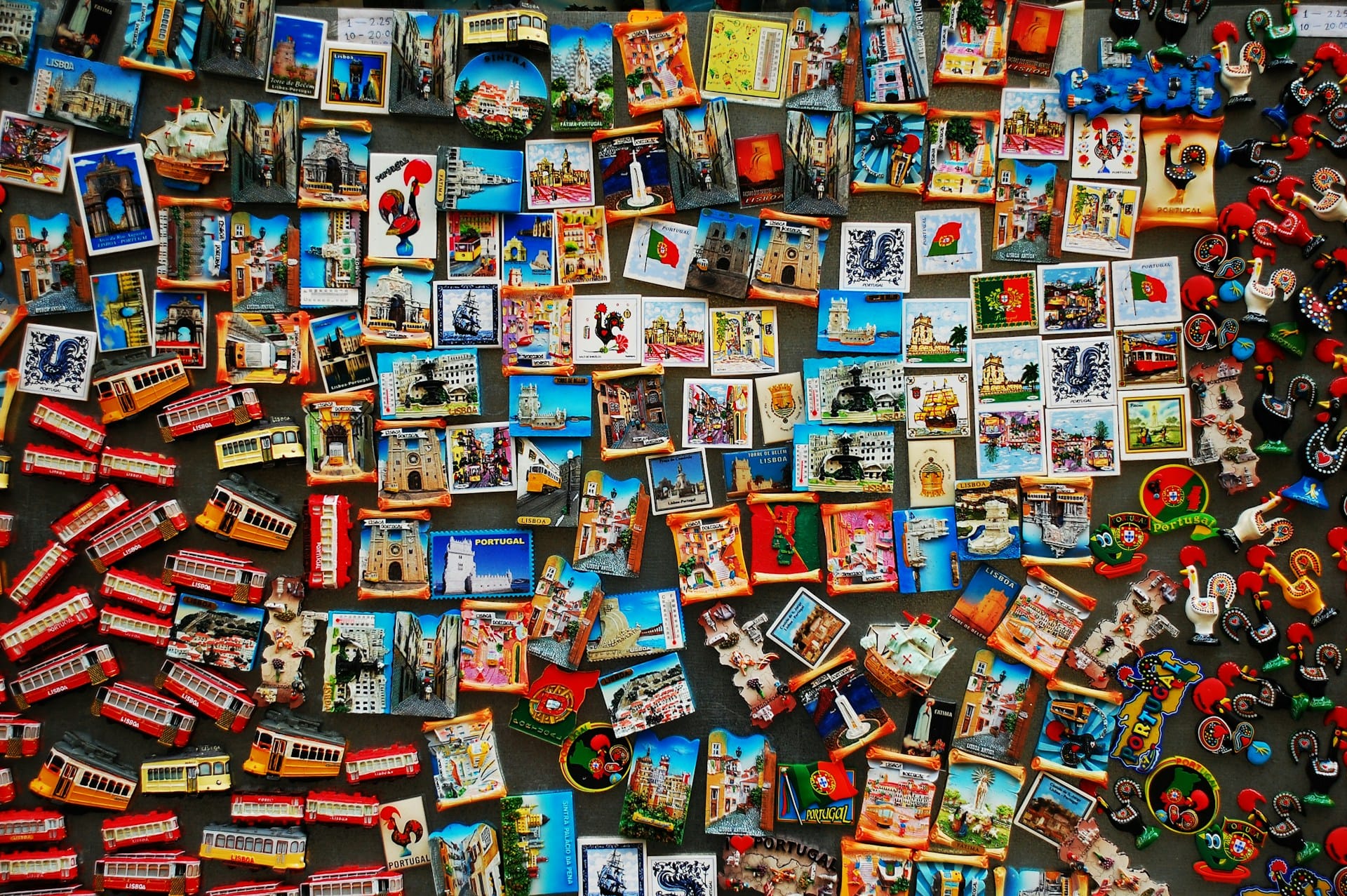
Off late, KrA and I have mostly been opting to purchase fridge magnets as souvenirs. Everything else almost always gets tucked away in a drawer or a shelf in the basement and we barely give it a second glance! We also spend a lot of time in the kitchen and dining room, so we often get to glance at these souvenirs and reminisce about our trips.
Even as I write this, it occurs to me — why do we need to surround ourselves with memories, which only distract us from being fully present in the moment?
Anyhoo, at the museum, we found a lovely little souvenir in the shape of an old-fashioned telephone box. Brown and black, in colour, it was carved out of wood. It looked cute at first, but upon closer inspection, we didn't feel as though we loved it enough to want to shell out about $15 for it.
D found some stuff that he liked and was happy with his purchases.
We left the museum — KrA and I didn't buy any other souvenirs — and made our way to a fuel station about 5 km away before setting out on our journey to Halifax.
At the fuel station, I was gripped with a sudden desire to possess that little telephone-box-souvenir. So much so that after pulling out of the fuel station, I immediately pulled back in and parked, gripped by the urgent desire to go back to the museum and purchase that souvenir.
I thought I wouldn't be OK if I didn't have it.
Despite all my learnings that the material world of form doesn't really assuage our inner cravings — not for long, anyway — I was convinced that the regret I felt then at not having made that purchase, the regret I was sure to feel later when I had returned home to Ontario, would smother me.
It was a now-or-never decision. The fear that if I didn't get this thing now, I'd never be able to get it ever again, drove me mad.
I was all for driving back to buy it. KrA, darling lovely KrA, said he was OK if I chose to drive back but he did express his opinion that it wasn't necessary. D said that I should follow my heart.
the foolish pursuit of trying to future-proof our lives
One of the biggest lessons for me in these past few years has been the realization that many of us, as a society and as individuals too, are unable to handle uncertainty and disappointment.
We try to manipulate the circumstances of our lives to ensure optimal outcomes, which often translates to 'future security and certainty'.
For instance, opting to attend or send our children to only the best-ranking schools and colleges to ensure the best job prospects for them after graduation.
Except ... there is no way to 'ensure' anything in the future.
There is not one single thing we can do today that will guarantee a certain future outcome. No matter how badly we desire it, we cannot 'future-proof' our lives.
When we were growing up, our entire generation of academic high-achievers was driven by one main aspiration — to head to the west for a better future.
Well, sitting here in the vantage point of that 'future' now, can we really say this was the optimal outcome we all sought?
The world can and does change in an instant. The ground feels as if it is constantly shifting underneath us and that we can never gain purchase on it. Which means we're going to fall. That's a given. That much is certain.
But we don't want to fall. Because we are terrorized at the thought of how badly it will hurt! Perhaps so badly that we may never recover from it, never become whole again!
And if we can do something now to prevent ourselves from falling in the first place, we've got to do it, isn't it? There's no choice, right?
Wrong!
What if I'm not OK? What if I am OK?
What if it all works out?
I recently heard Mel Robbins say that in a talk; she said that asking that six-word question keeps us from spiralling into anxious thoughts.
It makes so much sense if you think about it.
We often keep asking ourselves rhetorical questions like, "What if it all goes wrong?" or "What if it doesn't work out?"
Of course, we're unable to answer those questions and we're left with only those questions to grapple with, adding worry and anxiety to the uncertainty of it all.
But if we flip that question on its head and instead ask, "What if it all works out?" or "What if I'll be fine?"
Sure, we don't have answers to those questions either, but those unanswered questions don't leave us with a pit in the stomach.
Instead, they leave us with a sense of possibility and optimism. They leave us not with despair, but with hope. And that's a much better place to be in.
This is completely different from someone telling us, or even we telling ourselves, "Everything will be OK." That statement immediately prompts a rebuttal. "What if it isn't?"
Which is why the question "What if it all works out?" feels so much more powerful and effective in tackling worries and anxieties in the present moment.
Sitting in the car at the fuel station in Baddeck on the edge of the highway, when I felt as though my entire world would fall apart if I didn't buy that one tiny souvenir, I was also overwhelmed by the intensity of my emotion.
It was again D who came to the rescue unwittingly. Knowing that he was watching me and learning from me, I took deep breaths and told myself and to KrA and D, "It's alright. It's just some material stuff. I will be OK without it."
Something in me shifted then. It helped to understand that my turmoil wasn't about the souvenir; there was some emotional upheaval in me, perhaps I was troubled by having to leave from Baddeck, perhaps I wanted to stay in the calmness of nature and that vast open space for longer, maybe I didn't wish to go back to the hustle and bustle of a city ...
But more importantly, when I could ask myself "What if it all works out?", and eventually tell myself convincingly that "I'll be OK, no matter what," it helped shift the narrative and move on.
If you're wondering what I decided at the fuel station — to go back for the purchase or to keep heading towards Halifax — I'm happy to report that I chose the latter.
I've learnt enough by now that material possession will never address the underlying emotional dysfunction we experience from time to time. So I decided to drive on and told myself that I'd deal with whatever feelings showed up later — remorse, regret, annoyance.
A few days after we returned home, it suddenly occurred to me that I was perfectly alright without the cute little souvenir. In fact, I hadn't even cast a second glance at the ones that we had brought back.
Little D had a similar experience. He got two souvenir pennies at Peggy's Cove, and one of them fell into a drain when we were parking the car in our hotel premises. Gone forever.
There were tears and fears and a lot of cuddles ... and a few days later came the realization that he too didn't miss that penny anymore.
I think I'm beginning to understand the meaning of that axiom 'Desire is the root cause of evil.'
Desire brings forth so many emotions in us, and when faced with them, our first instinct is to squash them, squelch them out of our system. And fulfilling that desire feels like the only way to get rid of those feelings in that instant.
Until the next desire and the next upheaval of emotions come along. And the story repeats itself.
But desire too arises naturally. Of course, society and culture have brainwashed us into believing that owning more things and doing more activities will help keep those feelings of confusion and lack of control at bay. And we inadvertently go down that route until we figure out at long last that that path leads us nowhere either.
So maybe the solution lies not in stamping desire out altogether, but to be able to withstand its arrival, and then its potential non-fulfillment too. To last long enough through these emotional cycles to realize that we will be OK with disappointment too.
If you loved this reflection, you'd enjoy receiving my monthly updates on the creative life. Sign up to receive Monthly Missives From The Dream Pedlar in your inbox. Arrives on the last Sunday of every month. Comes bearing the gift of three books of mine when you first sign up!
Programming update reminder: This is the last post being published as part of the weekly schedule of Field Notes From Liminal Spaces. Also, Tales For Dreamers and my YouTube Channel will take a pause in August and will return in September. To know more, please read this post. Thank you for your support, as always.