books you may love: The Aayakudi Murders by Indra Soundar Rajan
Reading a book originally written in Tamil and translated into English, nostalgia, and writing about Gods and deities

A while ago, there was a collection of books featured on StoryBundle under the title 'In Translation'. Essentially, these were books originally written in another language and translated into English.
The Aayakudi Murders by Indian Tamil pulp fiction author, Indra Soundar Rajan, caught my attention.
For those who don't know, Tamil is my mother tongue. My parents hail from the southern Indian state of Tamil Nadu, but I was born in Thane, near Mumbai (or Bombay as it was known back then), where my parents had moved for my Dad's job.
I grew up speaking Tamil at home, but I never learnt to read and write it. I can decipher some letters of the alphabet and put them together painstakingly to figure out individual words, but that's the extent of my literacy when it comes to Tamil.
But the instant I saw a title of a work of fiction originally in Tamil, I wanted to read it. So I went and bought the entire bundle.
Last week we were in Cancun and little D was the first of the three of us to come down with a stomach bug, followed by me, and finally KrA on the last day of our stay there.
That gave me plenty of time to read The Aayakudi Murders.
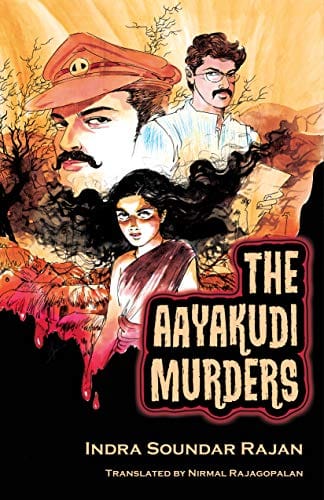
The book cover is very typical for a South Indian story. It looks like a movie poster, doesn't it?
The story is told from the point of view of a journalist, Rajendran, who receives a tip about a ghost committing murders in the village of Aayakudi. He goes there to investigate and gets entangled in the mystery, which only gets spookier and seemingly more paranormal.
Add to it village superstitions, beliefs in sorcery and spirit possessions, and a mystery that is full of twists and turns! All this makes for an excellent read.
But what I enjoyed even more were the Tamil words that were scattered throughout the story.
Words like thambi (meaning brother, used to address a young man), vannakkam (meaning namaste), and the quintessential Aiyaiyoo (the equivalent of Oh-Oh)!
All the colloquialisms and slangs were simply a delight to read.
In one instance, the mother of an unmarried girl is attempting to convince her to get married to her maternal uncle.
(This is a very common practice in villages and in fact, both my mother's elder sister and my maternal grandmother married their own maternal uncles. This has led to me having cousins who are also my uncles and so on!)
Unfortunately, the maternal uncle in the story is a crook and the girl is reluctant to marry him. In an attempt at persuasion, her mother says,
"... The saying goes that one simple girl can achieve with patience what a thousand geniuses cannot. You will make him an even better person."
"No, ma. I'm not some social worker; it's not my job to reform anyone. I'm just an ordinary girl."
"Look here, if you do anything to put this wedding at risk, neither you nor me will ever see your father in good health again!"
"You've used that same threat to talk me into agreeing to so many things!"
'Well, add this to the list."
Anyone who has grown up in a Tamilian household, or even in an Indian household in general, in the 80s and 90s would find much hilarity in this.
Threats that any disobedience on our part would endanger our parents' health were used liberally and rarely failed to work in our parents' favour! It just never occurred to me to question the lack of logic in those admonitions!
The setting of the book in a remote Tamil village sent me down memory lane.
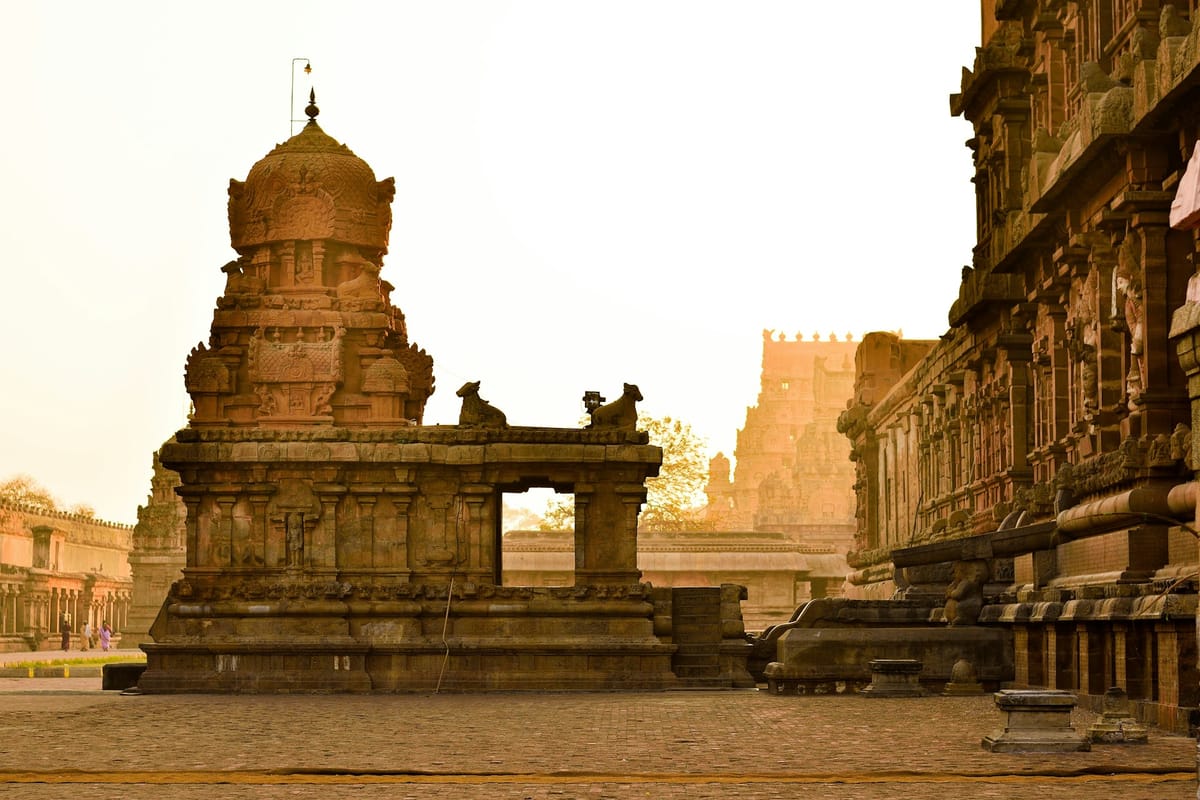
One of the things I miss greatly about being in South India are its vast temples with their open courtyards and majestic, intricately designed gopurams, the towers that adorn the tops of the temple.
It is said that one glance at a gopuram can wash all your sins away.

But it is the spaciousness of the temple courtyards that brings me immense relief.
Of course, on a day of festivity, crowds throng the place, but on other ordinary days, the vast premises on which one can walk barefoot provide an area of comfort and an energy of reassurance that I'd find my courage to walk through life and all that it brings.
Faith was an unquestioning presence in my life throughout my childhood. We went to temples. My mother, especially, would step into any place of worship, be it a church or a dargah (a shrine built over the grave of a Sufi saint). Even now my parents' excursions entail trips to temples in Tamil Nadu.
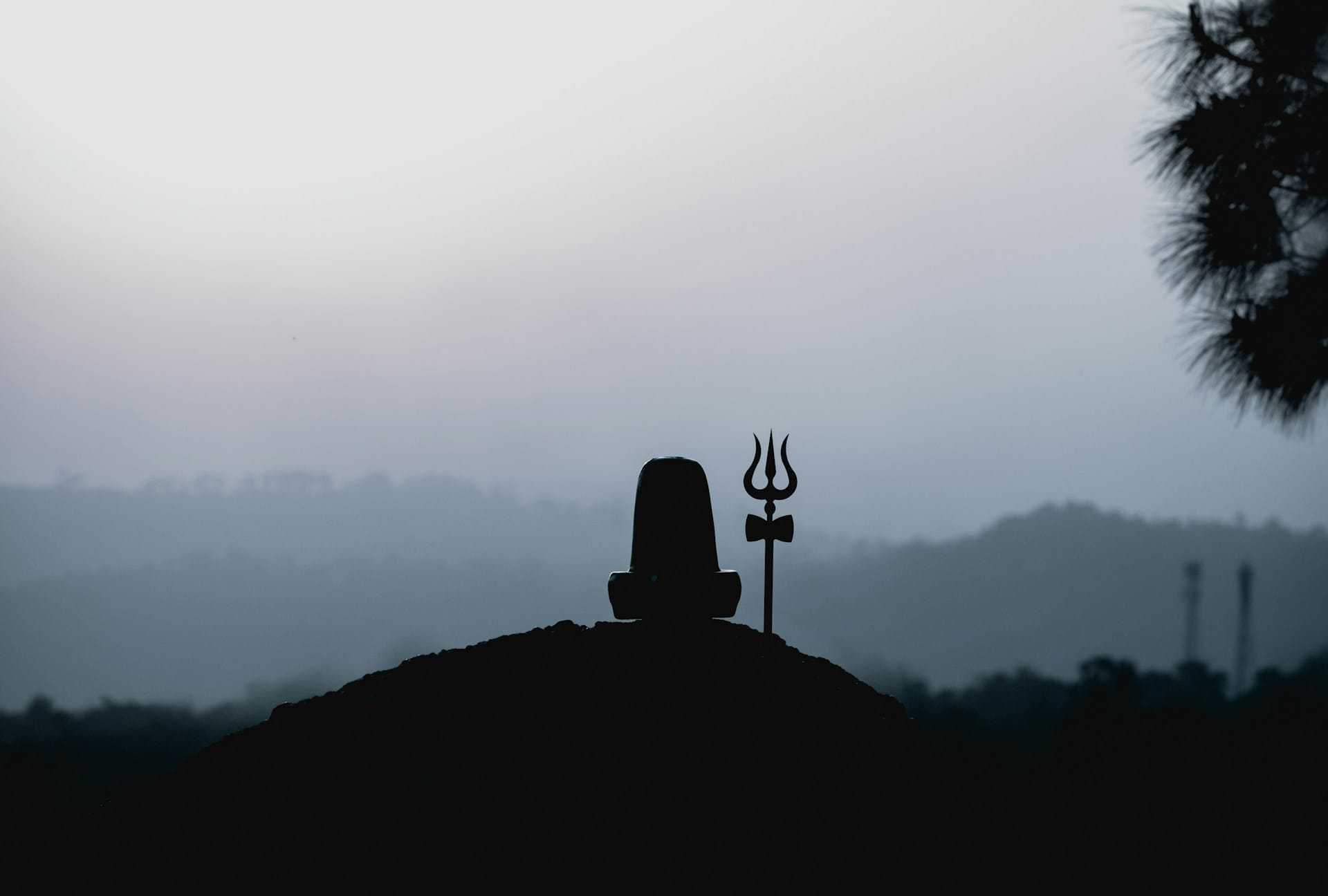
I myself had a huge wobble this past decade. Shortly after D was born, I began to question everything I had learnt about God and faith until then.
Over time, I've come to realize that there were two things I didn't like about worshipping God — apart from the crowds and noisy chants in temples.
The first was the way prayers constantly entailed asking for money, health, good academic results, or any such particular outcome.
The second was the realization that the very devotee who would have prostrated humbly at the feet of God would then turn around and snap at another human being as though the latter were beneath him.
I simply couldn't reconcile the fact that someone who believed in a higher unseen authority could possibly treat a fellow human being despicably.
Now, I've become more comfortable about keeping my faith as a private matter. I don't feel the need to participate in group worship on festive occasions; my relationship to God doesn't change with the time of the day or the season of the year.
What I ask God the most for is courage to face situations calmly and with great compassion. I ask God for the strength to not fall apart when life feels difficult.
When my mind begins to spiral into anxiety, I chant mantras to bring me back to a place of mental safety and emotional stability.
It's also the Serenity prayer that resonates deeply with me now.
Dear God, grant me the serenity to accept the things I cannot change, the courage to change the things I can, and the wisdom to know the difference.
I love writing about Gods and deities.
A Benevolent Goddess is available for all subscribers to my monthly newsletter.
Blue-Skinned Mystics is another novella that is available for purchase. For now, it's only on Amazon. It'll soon be available on all other retailer platforms.
And then there is my expansive novel, Dying Wishes, Finalist for the 2023 Rakuten Kobo Emerging Writer Prize in the Speculative Fiction category.
Well, who knew that reading a pulp fiction book originally written in my mother tongue would send me down memory lane thus!
But that is the power of books and stories, isn't it? They make us think deeply about our lives, reflect on the choices we make, and show us a different perspective.
What a blessing it is to lead a life of writing and reading!
I wish you too, dear Reader, many joyous days spent doing the things you love that encourage you to become a kinder and more empathetic human being.
If you love what you read, consider staying in touch by signing up for my newsletter, Monthly Missives from The Dream Pedlar. It arrives in your inbox on the last Sunday of every month, bearing musings on writing, reading and living the creative life.