did I do the right thing?
on decision-making as a parent and as an author, and realizing that between the choices we make and the consequences we face, there are far too many factors outside of our control

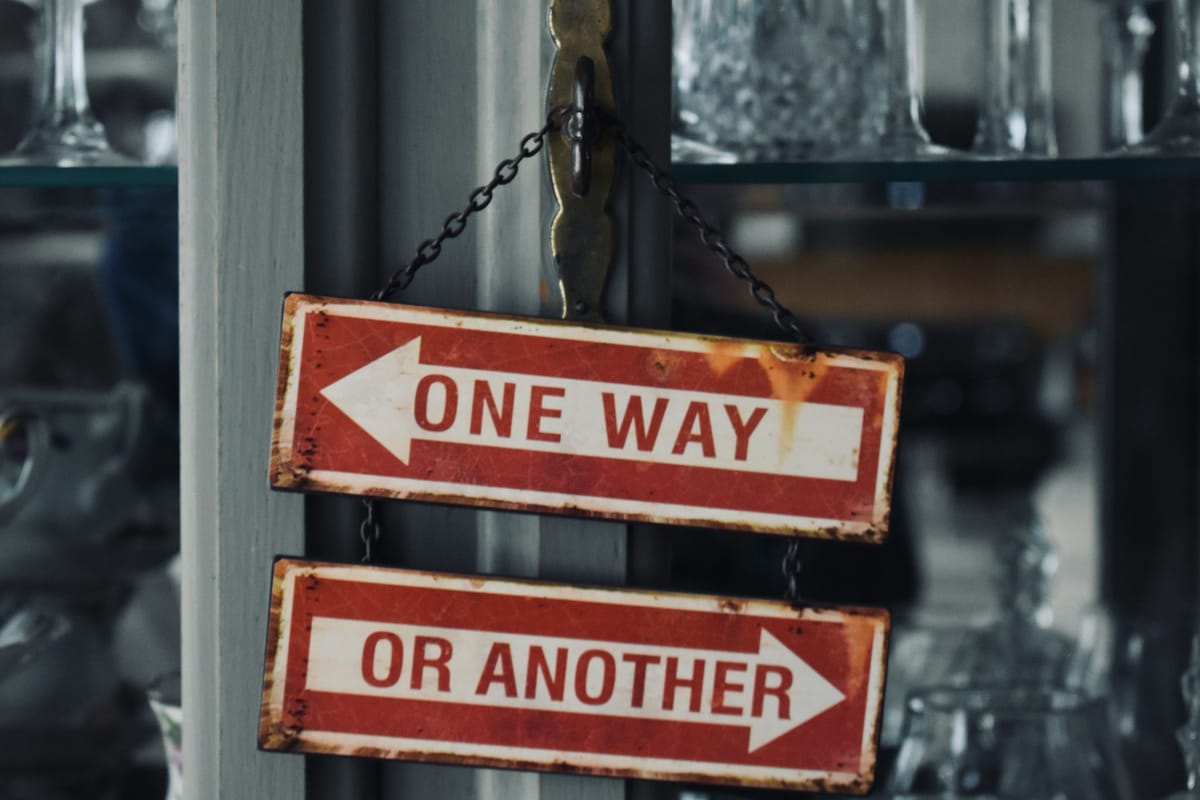
Perhaps it's just me, but this is question I ask of myself when it comes to the aspects of my life that are most important to me — parenting and writing.
Did I do the right thing?
But who can really answer that question?
Sometimes there's a tendency to judge the quality of our decisions and choices based on the outcomes and consequences we face. Annie Duke calls this 'resulting', and I was pretty sure I had written about it at length at some point here on the blog. Looks like I haven't.
Essentially, it means judging the quality of a decision based on its outcome rather than considering how good the decision-making process was.
When I first read about it, it helped me change my self-talk when thinking about my past choices and their outcomes.
Today was another heavy (not for me) decision-making day.
Which is why I'm back at the library now after ages — the Central Branch of the beloved Burlington Public Library — for a few moments of quiet contemplation and writing.
Little D had signed up to attend a basketball open run this evening at a local club. But in the afternoon, he said that he didn't really want to go.
He revealed that he had agreed to sign up because we (KrA and I) had been very persuasive when the opportunity had presented itself and he had felt that he couldn't say No.
In fact, he recalled that he had first refused when we had asked him, and it was only after our encouragement persuasion that he had agreed to go. But, he reiterated, he didn't really want to go.
In the course of the conversation, we learnt more about this situation. All of last year, D had been eager to try out for Rep teams this summer. He went to one tryout in June but didn't make it. He has two more tryout sessions in the coming weeks.
But somehow along the way, D has come to feel that he doesn't want to play competitive basketball. He's happy playing the sport for fun.
In fact, he went to summer camp this year and discovered that he enjoys playing a wide range of sports.
These past few weeks he's been at home, having decided to spend the last six weeks of summer at home and with us. And we've spent most mornings playing a wide variety of games ranging from ultimate (apparently that's what frisbee is called!) to badminton to tennis to basketball. Beach tennis is another of his favourites!
He goes once a week for basketball training, which also he enjoys. He's been playing some form of basketball or the other — House League, 3v3, training — for the past few years.
When we asked him if he'd like to go for training twice a week, he was pretty clear that he didn't want to. Once a week is good, he said.
He said that he intends to attend the basketball rep tryouts that he signed up for and that he will indeed put forth his best attempts.
But, he didn't want to go for an additional open run today.
My first instinct as a parent was to somehow persuade him to go. He signed up for something, so he ought to show up, isn't it? Follow through, and all that?
But the child has so much clarity of thought, how the hell dare I instil doubt and FOMO in him?
When KrA got off the call he was on and joined our discussion, we were clearly at a loss. At one point he suggested that D ought to go to the session, but that if he feels tired he can sit out.
I pointed out that when we don't allow D to make a contrarian decision here in the safety of home, how can we expect him to make the choice to sit out when the other children are still playing? Would he feel comfortable making a contrarian choice then in the presence of teammates and coaches?
In the end, we decided that we wanted to honour D's thought process and his decision. D chose to not go.
He then went off to play the piano, while KrA headed back down to the basement to resume work. I sat at the table for a while, feeling annoyed.
I then ran down to KrA and said, "Now I'm feeling angry. And I think I ought to make him go."
To which KrA replied, "But you were right. There's no point dragging him there and making him do something when his heart/mind is not in it."
That was all the reassurance I needed.
We spent the rest of the evening continuing to play LEGO — D's building a huge railway network — then D went up to do Math with KrA, and I came here to the library to think and write.
Late last year, I decided I wanted to resume learning French. I was so motivated, that I completed an entire Beginner/Intermediate self-study course on YouTube!
I signed up to do an online course over the winter session, January—May. It was every Saturday morning for 3 hours.
Three or four sessions in, I decided I didn't care about learning French anymore. I wrote to the instructor making up some excuse about conflicting work hours and bailed.
I was so clear about my decision that I've never once regretted it.
I even realized that the only reason I had signed up for a Saturday morning class was to have something to do other than wake up early and not know where I'm going with my life.
Earlier this year, I decided to step back from writing fiction. More importantly, I decided to stop publishing my monthly newsletter, 50 editions of which I had published non-stop over the past 4+ years.
Over the past few months, I've come to understand the nuances of this decision much better.
I wasn't able to handle both writing and marketing at the same time. I don't subscribe to a lot of the expert advice that is given out there, exhorting authors to do so much in the name of promotion.
All I wanted to do was write fiction and, hopefully, find a few interested readers, instead of trying to turn myself and my writing into some kind of brand and follow all that North American capitalist scheme that wants to turn everything it touches into gold but ends up killing the very thing instead.
Now I know what I will do differently in my writing and publishing career. I'll save those insights for an annual reflections post later this year.
Does that make my earlier decision to quit writing 'wrong'?
No way!
Because the clarity of thought I've gained from making that decision to quit and taking a break from marketing my fiction and writing that monthly newsletter is priceless.
We're making a short trip to India later this year for KrA's cousin's wedding. We'll be in Ranchi for all of 6 days. We arrive on a Saturday morning after a 24-hour journey comprising two flights and a layover, and we leave that Thursday afternoon.
Saturday is a relatively quiet day. The other days are full of events.
We decided to not make a detour to Chennai during this trip to meet my parents. There were several reasons for that.
We're travelling in the midst of D's school year. In fact, he has end-term exams the very week we return. So it felt unwise to take more days off than necessary.
Also, it's monsoon season in Chennai at the time, and we didn't want to get stuck in the rains.
We began toying with the idea of asking my parents to come up to Ranchi for the duration of the wedding. Everyone seemed OK with the idea. The groom's parents — KrA's uncle and aunt — even called my parents to invite them for the wedding.
But the more KrA and I have been thinking about it, the more the logistics of such an undertaking seem beyond our means.
My parents are aged. Mom turns 75 later this year, and Dad is 82. Fortunately, they're both in good health. But mobility is a real concern. They can't climb up and down steps without support.
Under such circumstances, when I'd be already pressed for time and energy, I'd be lying if I said that I could look after my parents during those five days.
I've told them that we'll make another trip to Chennai sometime next year with the sole purpose of spending time with them, rather than trying to add more logistics and responsibilities to an already hectic trip.
Is it the right choice?
I don't know. My parents want to see D, and they find it unbearable that we'd come all the way to India and not take an additional 2-hour flight from Ranchi to Chennai to go see them.
That would mean taking two weeks off of school, I said to Mom.
"That's alright. We can manage," was her standard response.
This was also her response to the question of whether they can travel to Ranchi. "We can stay put in the hotel when you're busy and meet you when you're not."
It's tricky to make these choices, especially for someone like me who has a strong sense of responsibility towards everyone. I want to do right by everyone.
But choices in life are not like that. They're not straightforward and clear. They don't guarantee that everyone will be happy with it. And even after we make a choice, something can happen that will make us question our decision in hindsight.
But here's the thing.
When we make a choice based on the information and understanding and capabilities we have in a given moment, it's rather illogical to come back to judge this choice from the frame of reference of hindsight.
That's like trying to evaluate an essay written in English based on how proficient the writer is in French!
Two completely different parameters. Two completely different frames of reference.
I think it's hard for us human beings to accept that the life we live is not only a consequence of the choices we make. There are factors far beyond our control that play a huge role in how our lives turn out.
To resist this fact is to be at war with life all the time.
The only option wise course of action is to make peace with the choices we make, no matter how imperfect or sub-optimal.
Is this the right thing to do? I hear you ask.
Well, who can really answer that? Not even Time.
(Edited to add the next morning)
Last night at bedtime, poor D asked me if he had made the right choice by not going to the open runs.
I asked him what he thought about it.
And out tumbled the entire story.
How he had been feeling bad about not having been selected in the June tryouts.
How he had convinced himself after that that he was not a 'competitive' player and that he didn't really want to go for Rep basketball.
How he had chosen to let go of a dream because the rejection hurt too much.
Poor child! To see him go through this utterly human experience of trying and failing and feeling discouraged requires a courageous heart.
I recently learnt that feeling regret is not responsibility. Taking action is.
While we've often applied this in the realm of mistakes — we make amends; for instance, if we said something hurtful we apologize and take some action, like helping fix whatever we broke, or drawing a Sorry card — it hasn't occurred to me until lately to apply this to the realm of fearful choices.
In terms of 'taking action' this time, instead of wallowing in regret, I suggested to D that he could perhaps go for training this Saturday to have one round of doing the drills and playing with children his age in a team. He jumped at the opportunity enthusiastically.
D said this has been a learning experience for him. It has been for me too.
I was so impressed that D could tell that we were not 'forcing' him to go earlier, but that we were trying to encourage him to not avoid an experience out of fear.
Well, at the risk of 'resulting', I can say that not forcing D to go to the open run was indeed the 'right' choice! 😅 It gave him the opportunity to unearth what exactly was going on and to attend to it in a less fearful way and with greater acceptance than he was able to before.
Parenting has taught me far more about life and myself than anything else ever has.
As I say to D several times a day, "Thank you, D, for coming into my life."