the story of a book left unread
On daring to be bad in our attempts, and not letting the desire for greatness and excellence come in the way of appreciating our daily efforts

After having abandoned The Folly Of Memory, Book One of The Separation Of Souls Saga to languish in oblivion before, during and after its launch in mid-July, the break that I took from writing and indie publishing fiction has stoked my creative spirit once more.
Edits on Book 1.5 in the series were long done. All that remains is to proofread and publish it.
I've written 80% of Book 2. I was on a roll, writing it, a few months ago. And then I came to know how it ends, and that totally killed my desire to write it.
But I want to write. I want to write without worrying about the marketing and sales aspects of it. Not writing is akin to not breathing for me. Can't do that for too long.
So I've gone back to reading The Folly Of Memory in an attempt to get back into the world of the story. And I'm loving it.
I know, I know. I wrote it. But ask any writer, and they'd tell you that re-reading their work sometimes makes them cringe. It does that to me all the time. Self-doubt and harsh self-criticism, my forever companions.
But this time, I'm actually enjoying the story very much. I've been reading it on my Kobo, which helps to keep the reader's hat on and not let the writer's and editor's voices creep in.
And I'm reading for story. Not to seek out errors in order to correct them. (Well, I did spot one and corrected it, but isn't that amazing? That there was just one error!)
Anyhoo, in order to keep from straying away from reading this tale, I decided to allot time for the reading of other books on weekends only. Come Friday night, I set aside my work and delve into a weekend of reading for leisure and entertainment.
Which is how I read the latest Inspector Persis Wadia mystery novel last weekend.
I'm beginning to find that reading a book over a couple of days, spending several hours a day in a book, is a much more delightful activity than letting the book unfold over several days, with me reading a few pages at a time, while spending the bulk of my time getting lost in the hallways of the Internet, which offers several avenues to stray on.
I remember even back when I used to write fiction in the mornings after D had left for school, I'd resume reading a novel at lunchtime. And that would pretty much make it impossible for me to get back to my own manuscript after that for the rest of the day.
So I'm thinking this ritual of reading in this immersive fashion over the weekends will serve me well when I go back to writing Book 2.
For this weekend, I had initially set aside a book titled The Instrument Must Not Matter by Christine Fischer Guy.
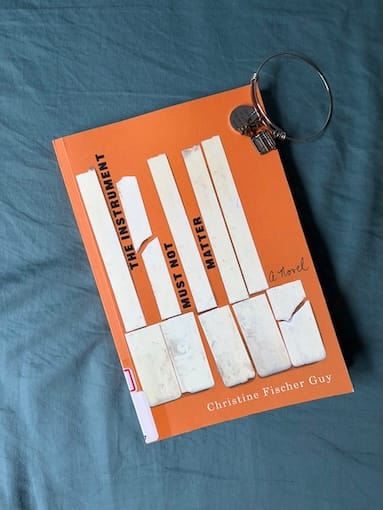
I learnt of this book from the local library which had scheduled an author event for Guy to talk about her book. I had signed up to go but withdrew at the last minute for it having been a very long day and I could barely keep my eyes open. But I was determined to read the book at some point.
A story featuring a gifted pianist, and set in the world of music — what more could one ask for?
But when I cracked open the pages on Friday evening, I didn't expect to be woefully triggered a few pages into the story.
The protagonist is a gifted, passionate pianist. Naturally, she's a character who lives and breathes music, who has a transcendental relationship with music. She can sight-read at a glance and play a piece without referring to the sheet after that.
Normally, I'd find this kind of gift of talent and passion for excellence in anyone, even a fictional character, very motivating and relatable.
But ever since becoming a mother, I've had to put in a lot of inner work to ensure that I do not impose any demands of perfection on my own child in any of his undertakings.
I don't always succeed — having grown up in a culture demanding high performance and perfection, both academically and otherwise, from a very young age — and those slip-ups, even if only few and far apart, remain my greatest regret when it comes to parenting D.
Still, I abide by my own rules and values at least 90% of the time, and I have worked hard to create an environment in which I encourage him to try, even if he performs poorly at first, and to keep at it, so that he himself can see the difference when his outcomes switch from poor to good to amazing, no matter how long it takes.
When D was five years old, we bought him a small 32-key mini piano, having grown sick of the plethora of toys in stores. D took to it instantly, trying out all the different keys with a child's curiosity and innate sense of exploration.
Shortly after, we signed him up for piano lessons.
He hated them!
For a handful of months, he went to a class to learn the traditional way. Coming home to practise scales to perfection drove him to tears. He much preferred to let his fingers run over the keyboard, making tunes and listening to them, communicating silently with the music he was making.
His teacher asked me if he practises at home, and I happily said, "Yeah, he does the scales for a bit and after that he likes to explore and plays freely."
To which the teacher replied, "This is like people wanting to play Tchaikovsky before they've even learnt anything about the piano."
His remark felt like a slap to the face. Naturally, that was D's last class with that particular teacher. Thankfully, D was only about five years old then, and didn't absorb the callous words of that teacher.
More than a year later, the mother of a child who came for tennis lessons at the same time as D, told me about Hemispheres Music Studio and their play-based method of learning.
D went for an intro lesson there. And he loved it!
It's been great for him these past few years. The nature of the program is such that it allows him to develop a deeper relationship with the piano and its keys, so he's not merely trying to reproduce music from a sheet on to the keys, but he's developing an understanding for the way the music moves.
So much so that he has composed a few melodies of his own already, confident with the way he's been able to engage with the instrument and build a relationship with it.
He's now working on intentionally developing a sense of musicality.
I recall when I took vocal lessons in Carnatic music as a young child — a rite of passage for any child in a Tamil Brahmin household — I was pitch-perfect. I was great at hitting the notes perfectly.
But I didn't know a thing about musicality until I was well in my late teens.
And my understanding of musicality came from unexpected sources — Western pop and Indipop music!
Or maybe I just needed the sensitivity of an adolescent to appreciate musicality better and in more depth than I could as a child.
Of course there were children who seemed to have an innate talent for such things, or a talent nurtured by constant exposure to music having grown up in a household where one or both parents are musicians.
My family appreciated music, and everyone went for lessons in their time, but they were not professional musicians in any way.
All this to say, that often it takes a long time of doing something and trying it repeatedly to become good at it.
'Dare to be bad' is a catchphrase that author Dean Wesley Smith often uses.
This is something I've been reminding D and myself too. When we try something new, we don't have to get it right the first time. It may take 5, 10, 50, 100 or how many ever tries to become good at it.
But we seem to put a lot of pressure on ourselves to get things right early on, be it math or music or anything else. Into all our endeavours, there seeps this great sense of urgency to become proficient at the thing we're doing.
No wonder we give up so easily and so quickly.
If we can be comfortable with being bad — or better still, if we can refrain from judging our efforts as good or bad solely based on the outcomes — we'd find ourselves sticking with the activity for the long term and naturally growing in skill, as a result.
But stories — books and movies — do a poor job of presenting this struggle, simply because of time constraints.
Instead, they tend to romanticize the frustrations and disappointments with dramatic background scores, and eventual success is almost always a given. The journey in real life feels very pale and tedious in comparison.
Which is why I reacted with unexpected (but not surprising in hindsight) panic after reading the first few pages of The Instrument Must Not Matter.
#
The writing is gorgeous, as you'll see from the excerpts below. The passages stoked in me that desire for greatness, that passion for excellence that drove me for much of my life, and continues to do so ... except I don't want that desire to erupt out of me like molten lava and burn and drown my child in the process.
D's ambition is like a slow fire that burns for a very long time. It persists, without becoming overzealous, without demanding quick results.
Mine is the flame full of sparks and angry hisses and crackles. It wants every move to be perfect, every act of labour to yield a delicious fruit.
Where D's fire offers warmth, mine threatens to scorch and char, to burn and devour.
It's only age that has tempered my passion somewhat.
Yet, it's the same passion to do the right thing for D that keeps my other passion for greatness, both in me and him and everyone who saunters into my orbit, in check,
keeps me from drowning him in the flash flood of my expectations and unfulfilled ambitions,
and helps me make peace with the messy journey of trying and failing often and maybe succeeding somewhat that is inevitable no matter what we choose to do.
Which means I have to do everything I can to keep that desire for greatness from storming out of me and scorching D in any way at all.
The novel begins like this —
Only Debussy can ferret out the truth of a piano, so she starts with the majestic opening bars of "Sunken Cathedral" on this Steinway Model D. Same as Glenn Gould's favourite practice piano, leagues beyond her piano at home but not quite equal to the school's best, and slightly smaller than the grands she's known. It might work in her uncle's condo, but she wants to stay here a little longer. An ancient sense resonates here. This storied space, filled with so many thrilling instruments, is imbued with energy that feels like love.
"Can I try the one she was playing?" Lila tips her head toward the other pianist in the Steinway basement. She's the source of the arresting magenta and silver notes Lila heard as she arrived; the opening movement of Beethoven's final sonata, played with infinite tenderness by someone with serious talent. Someone whose work she feels she should know but doesn't recognize.
~ An excerpt from The Instrument Must Not Matter by Christine Fischer Guy
#
... but nothing touches the piano Sofia chose. It pulls her back into its gravity. If she can't have it, she must have a little more Debussy from it before she goes.
She hears the swirling water as the cathedral begins to move in its watery grave, then the small whirlpools of water at the highest peaks to lead to surface breaks, the sluicing of seawater from the towers, the impossible rise of the structure from the waves. In the notes, she finds the wet glitter of stone in the sunlight and the reflection of the cathedral's aqueous twin, the thrill of its rise and dramatic decline toward its inevitable retreat, the unbroken pattern of rise and fall until it sinks for the last time.
She returns to the room as though washed up on the beach.
...
It's a vehicle of wonder that belongs to a different plane of existence and much more work remains: Debussy's telling of the Breton myth needs to permeate every note. As the morning fog dissipates, the submerged cathedral of Y's will rise from the sea. The bells will play. The majestic organ chords will carry across the waves. She longs to find a place for herself inside it. No one wants brittle perfection, Professor Vrubel says, they want mastery with glimmers of personal truth. This instrument can take her there.
~ An excerpt from The Instrument Must Not Matter by Christine Fischer Guy
#
Even copying out those words took my breath away. How gorgeous the descriptions are! How much my heart yearns for beauty like that!
Oh, but I should not forget that I have no right to demand that someone else, let alone little D, fulfil my desire of unparalleled beauty for me. It's not his ambition for him to bear.
And this is why I'm not reading this story right now.
I fear I'd drown in a world where nothing matters more than a deep desire to touch the indescribable truth that works of great art make us encounter.
And when I'd surface, the real world would obviously disappoint me with its plainness and pettiness, no doubt holding a mirror to my perceptions of my own self and my life.
That's a hole I can't afford to sink into now, not now when darling D is only 10 years old and exploring and loving his endeavours, growing at his pace, no matter however long it takes.
Not now, when I often battle questions of 'Am I doing enough?' or 'Am I doing the right thing?' especially when it comes to parenting.
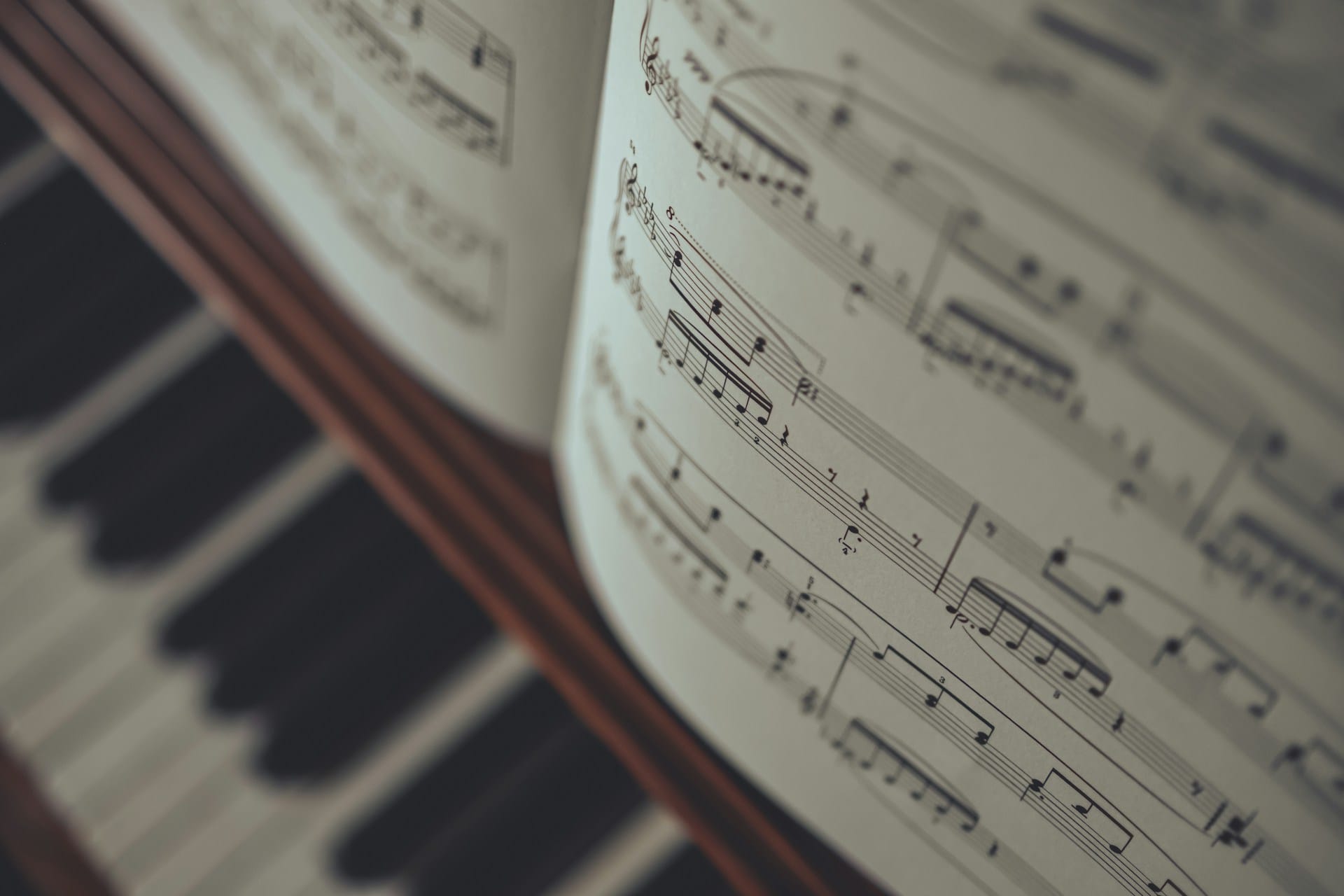
We also tend to forget that not all efforts have to be directed at achieving excellence.
What's wrong in simply wanting to play the piano as a means to de-stress at the end of a long day of school or work?
What's wrong in choosing to play for personal joy and leisure rather than for mastery or greatness? Is one kind of pursuit any less worthwhile than the other? Culture would claim it is so, but the truth is a different beast.
The truth is that the fantasy of an artist's life is often nothing like its complicated and messy reality.
And I worry that reading The Instrument Must Not Matter will drag me back into that fantasy. And all the work that I've done over the years to separate illusion from reality, especially when it comes to parenting, will unravel swiftly.
A book that opened my eyes to this truth is And Then We Grew Up by Rachel Friedman.
 Anitha Krishnan
I loved it so much I bought a copy for myself.
I think a lot of ambition is, at its heart, about control. We convince ourselves that with enough ambition we can master money, success, clutter, time, parenting, mind-set—our entire world. And then our fantasy of our life will finally match its reality. (The flip side of ambition fuelled by control is that whenever we fall short of our own expectations, we believe the fault is entirely ours. That we must simply try harder.)
...
We love the image of the writer/painter/musician startled awake by the muse at 3 A.M. She grabs the notebook by her bed and scribbles furiously, committing her inspired vision to paper before it flees her brain. She loses track of time, is impervious to thirst or hunger. Eventually she notices the sun has risen. She hears people walking to work below her window. And once in a while, this scenario does happen. But mostly the words do not burst forth in a feverish dream state, so you wake up when your alarm goes off and start writing anyway. Or you go to work and write at night, or on the weekends when the kids are napping, or for an hour a day at lunch.
~ And Then We Grew Up, by Rachel Friedman
#
Book blogger, Kriti, over at Armed With A Book, writes about a similar experience with another book.
The book she refers to is I Just Wish I Had A Bigger Kitchen and other lies I think will make me happy by social media influencer, Kate Strickler.
I had read this book a few months ago and loved it!
 Anitha Krishnan
Kriti writes over on her blog —
When I have already intentionally stepped away from social media, it felt jarring to re-enter that lens through someone else’s narrative. Even if they’re critiquing it. I have worked hard to quiet that frequency and I do not want to reintroduce it recreationally.
~ Kriti, Armed With A Book
This is exactly how I too feel.
Funnily enough, when I read her post, my first thought was — Oh, but the book has very little to do with social media and has so much more to offer.
My second thought was — I understand exactly how she feels, because I feel the same way too about The Instrument Must Not Matter. I know that the story is likely so much more than the greatness of a virtuoso pianist, but it's not a territory I can wade into again carelessly when I've had to work so hard to tune down those judgemental voices in my head that keep clamouring for more from me and the ones I love.
This is yet another reason why I think the journey of a book from a writer's imagination to a reader's hands is so far beyond the control of the marketing and publicity gimmicks we hope will bridge this gap.
I am certain I will return to this book when I'm in a different season of life. Until then, here's to enjoying the daily joys of this simple life, as yet unblemished by the siren calls of what the world deems important but we don't value as much.